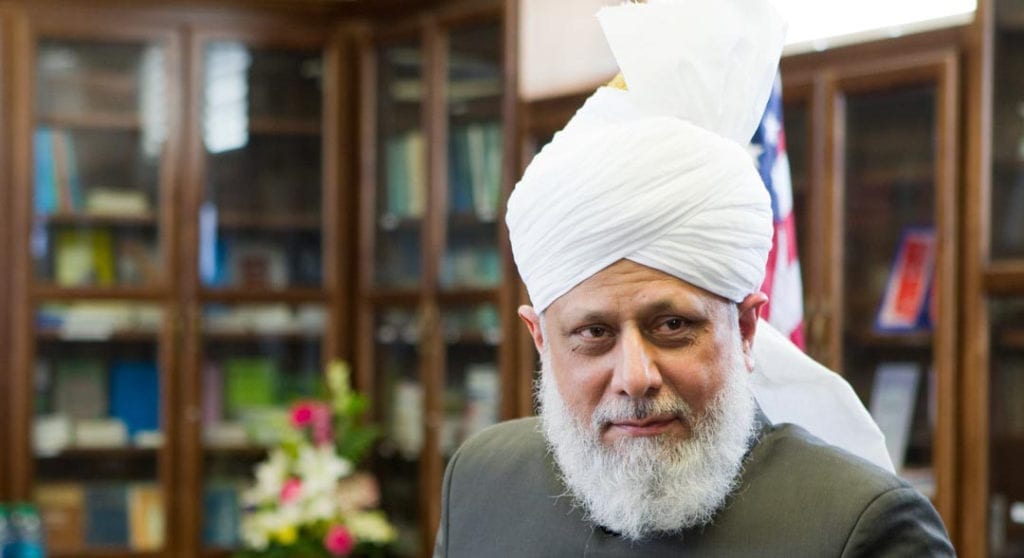
In a world often filled with religious intolerance and conflicts, the Ahmadiyya Muslim Community has found a guiding light in Hazrat Mirza Masroor Ahmed, the worldwide spiritual leader and head of the community. Known for his profound wisdom, tireless efforts for peace, and unwavering commitment to promoting interfaith dialogue, Hazrat Mirza Masroor Ahmed has emerged as a prominent voice advocating for harmony, justice, and religious freedom. Under his dynamic leadership, the Ahmadiyya Muslim Community continues to work towards building bridges of understanding and fostering a peaceful coexistence among people of diverse faiths.
The Spiritual Journey of Hazrat Mirza Masroor Ahmed:
Hazrat Mirza Masroor Ahmed was born in Rabwah, Pakistan, on September 15, 1950. He belongs to the blessed family of Hazrat Mirza Ghulam Ahmad, the founder of the Ahmadiyya Muslim Community. After completing his education in Pakistan, he dedicated himself to the service of the community and became an integral part of its administrative framework. In 2003, he was elected as the fifth Caliph and the worldwide spiritual head of the community.
Promoting Peace and Interfaith Dialogue:
Under the leadership of Hazrat Mirza Masroor Ahmed, the Ahmadiyya Muslim Community has actively promoted peace and interfaith dialogue as essential tools for addressing global challenges. His Holiness has delivered keynote addresses at prestigious platforms, including the British Parliament, the European Parliament, and various interfaith conferences, emphasizing the need for religious harmony and understanding. His message consistently centers on the importance of tolerance, justice, and the common values shared by different religions.
Championing Humanitarian Initiatives:
Hazrat Mirza Masroor Ahmed is deeply committed to humanitarian efforts, guiding the Ahmadiyya Muslim Community in its mission to serve humanity. The community, under his leadership, has launched numerous charitable initiatives worldwide, providing aid to those affected by natural disasters, poverty, and conflict. Its flagship organization, Humanity First, operates in more than 50 countries, offering medical care, education, and clean water to those in need, regardless of their faith or nationality.
Advocacy for Religious Freedom:
One of the significant challenges faced by the Ahmadiyya Muslim Community is persecution and discrimination in certain countries due to their beliefs. Hazrat Mirza Masroor Ahmed has consistently highlighted the importance of religious freedom and worked tirelessly to raise awareness about the plight of Ahmadis. Through his advocacy efforts, he seeks to foster understanding and acceptance of religious diversity, encouraging societies to embrace the principles of equality and tolerance.
Promoting Women’s Rights and Education:
Hazrat Mirza Masroor Ahmed is a staunch advocate for women’s rights and empowerment. Recognizing the vital role of women in society, he has consistently encouraged their education and active participation in various fields. The community, under his guidance, has established educational institutions that provide quality education to both boys and girls, enabling them to contribute to the progress and development of their communities.
Hazrat Mirza Masroor Ahmed’s visionary leadership has transformed the Ahmadiyya Muslim Community into a global force for peace, justice, and interfaith harmony. His tireless efforts to promote dialogue, humanitarian aid, religious freedom, and women’s empowerment have earned him widespread respect and admiration. As the world faces numerous challenges, his teachings continue to inspire individuals and communities to strive for a more inclusive, peaceful, and compassionate world. Hazrat Mirza Masroor Ahmed’s legacy will undoubtedly continue to shape the Ahmadiyya Muslim Community’s mission and impact on a global scale.
 Radio VOIB