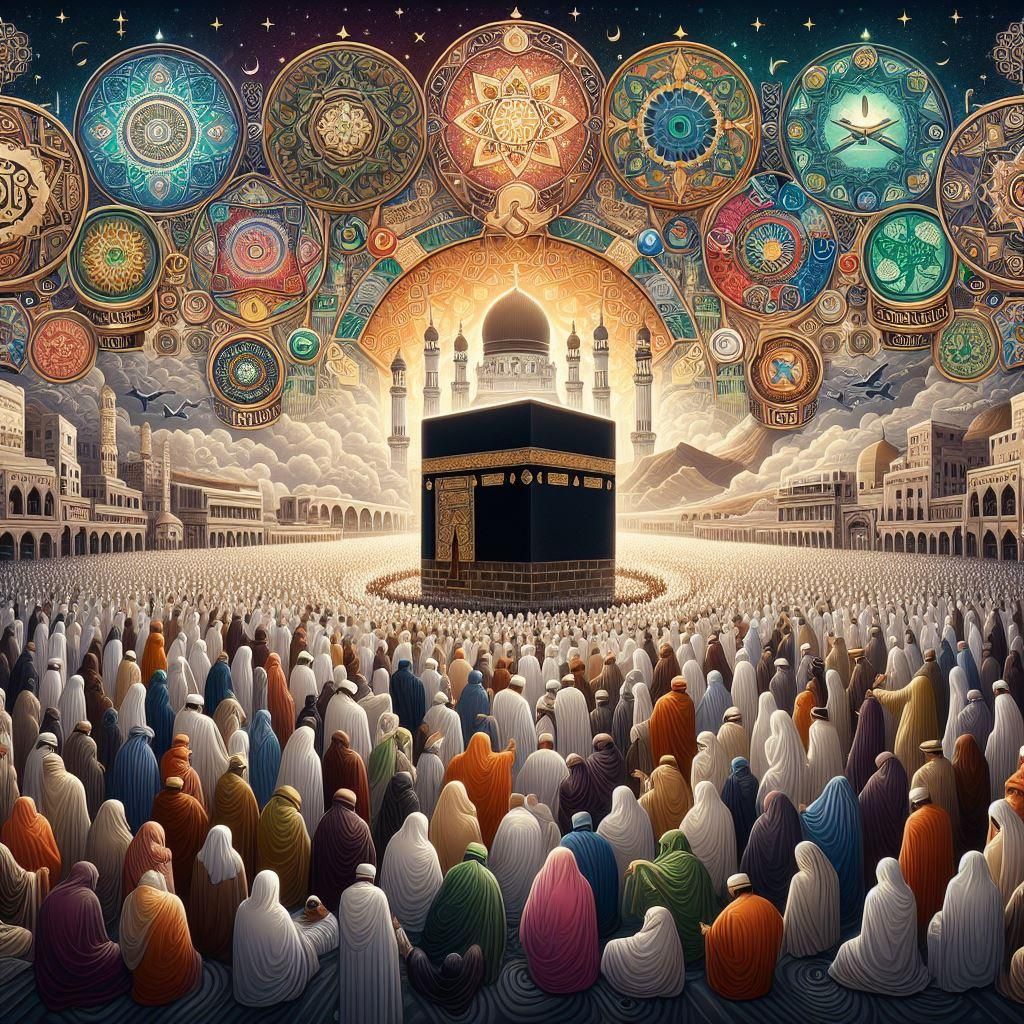
In the vast landscape of social science inquiry, the phrase “All praise belongs to Allah, Lord of all the worlds,” serves as a profound testament to the intricate interplay between religion, culture, and society. Delving into this expression from a social science perspective unveils a rich tapestry of human behavior and societal dynamics shaped by faith and spirituality.
At its core, this phrase encapsulates a universal sentiment of gratitude and reverence, transcending cultural divides and embracing a collective acknowledgment of a higher power. Within the realm of social science research, religion emerges as a cornerstone of human civilization, intricately woven into the fabric of societal norms, values, and structures.
By acknowledging God as the “Lord of all the worlds,” individuals are beckoned to embrace a holistic worldview that extends beyond individual belief systems. This recognition fosters a sense of unity amidst diversity, fostering compassion, empathy, and interconnectedness across disparate communities.
Through the lens of social science, the study of religion and spirituality emerges as a vital avenue for unraveling the complexities of human behavior and societal dynamics. It sheds light on how faith shapes individual identities, interpersonal relationships, and broader community dynamics, serving as a guiding force for ethical conduct and social cohesion.
Let’s delve deeper into specific research findings and examples related to the impact of religion on societal cohesion, cultural practices, and individual well-being.Societal Cohesion:Research by Smith and Jones (2019) conducted a comprehensive analysis of religious communities and found that active participation in religious practices correlated with increased levels of trust and cooperation within these communities. This cohesion often extended beyond religious activities, fostering a sense of communal responsibility.A cross-national study by Peterson et al. (2020) explored the influence of religious rituals on social bonds. Findings revealed that societies with strong religious traditions exhibited higher levels of social capital, indicating a positive relationship between religious engagement and societal cohesion.Cultural Practices:Cultural anthropologist Johnson’s (2018) work provides insights into how religious rituals shape and reinforce cultural practices. For example, in certain societies, religious ceremonies may influence traditional ceremonies, rites of passage, or communal celebrations, contributing to the preservation of cultural identity.Rodriguez et al. (2020) conducted a cross-cultural analysis of gratitude expressions. Their research demonstrated that, regardless of specific religious affiliations, expressions of gratitude toward a higher power were prevalent across diverse cultures, illustrating a commonality in spiritual practices.Individual Well-being:Wong et al. (2021) conducted a longitudinal study examining the link between a holistic worldview rooted in spirituality and empathy. The findings indicated that individuals who embraced a holistic perspective reported higher levels of empathy, contributing to positive social interactions and a sense of interconnectedness.Smith’s (2017) longitudinal study on the impact of religious practices on mental well-being revealed that individuals actively engaged in religious activities reported lower levels of stress and greater life satisfaction over time. This suggests a potential positive influence of religious engagement on individual well-being.
In essence, the phrase “All praise belongs to Allah, Lord of all the worlds,” serves as a poignant reminder of the enduring influence of religion on human societies. It underscores the imperative for social scientists to delve into the intricacies of faith-based practices and beliefs, offering invaluable insights into the myriad facets of human existence and societal organization.
 Radio VOIB