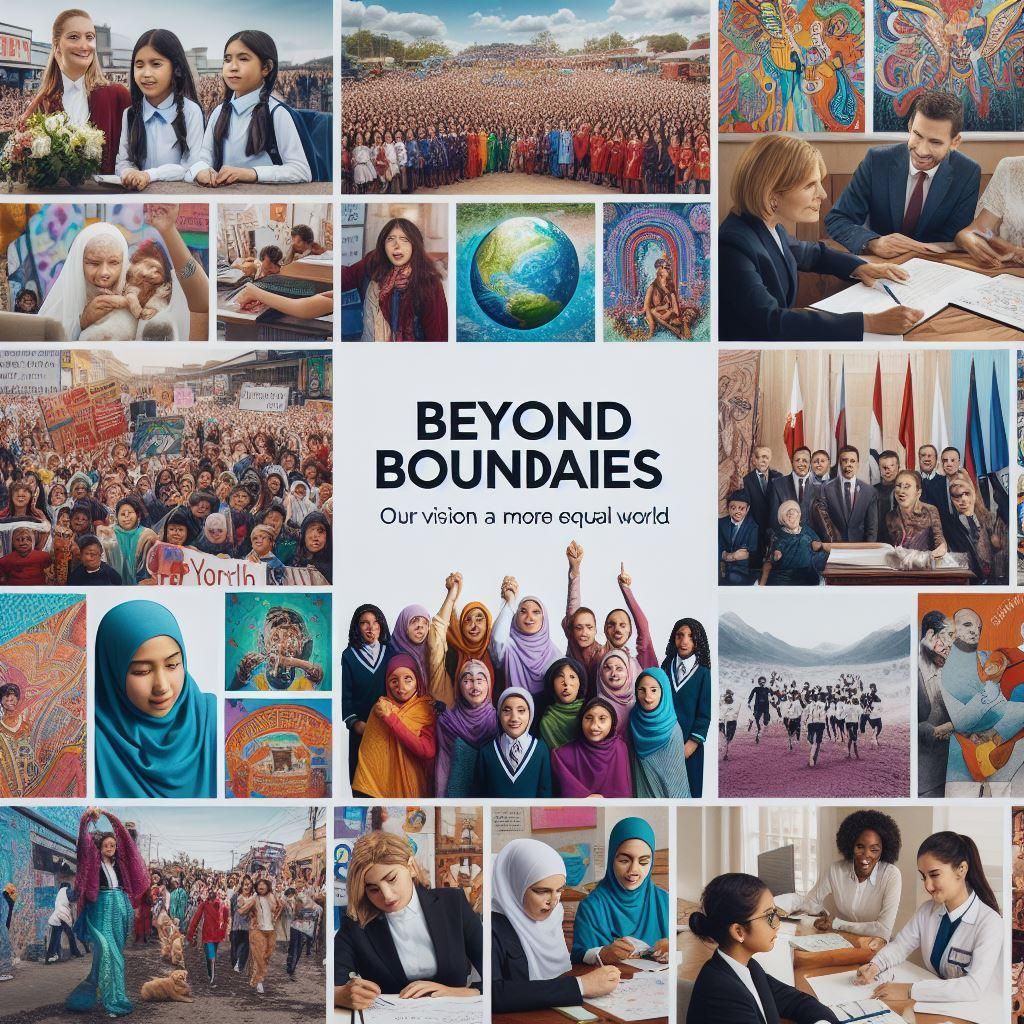
International Women’s Day (IWD) is a global day celebrating the social, economic, cultural, and political achievements of women. The day also marks a call to action for accelerating gender parity. In the light of Ahmadiyyat, the celebration of IWD can be seen as an opportunity to highlight the teachings of Islam as understood by the Ahmadiyya Muslim Community regarding the rights and status of women. Here are some points that may be emphasized:
References from the Holy Qur’an and insights from Tafsir e Kabir:
1. Equality and Dignity: The Holy Qur’an states, “O mankind, indeed We have created you from male and female and made you peoples and tribes that you may know one another. Indeed, the most noble of you in the sight of Allah is the most righteous of you. Indeed, Allah is Knowing and Acquainted.” (Surah Al-Hujurat, 49:13). This verse underscores the equal worth of all humans, including women, in the eyes of God.
2. Education and Empowerment: The importance of seeking knowledge is emphasized for both men and women, as the Prophet Muhammad (peace be upon him) said: “Seeking knowledge is a duty upon every Muslim.” (Ibn Majah). Tafsir e Kabir would likely elaborate on this by discussing the role of education in empowering individuals to fulfill their purpose of worshiping God.
3. Economic Independence: The Qur’an acknowledges the financial rights of women, including the right to own property and wealth. For instance, Surah An-Nisa (4:32) advises men and women to seek the bounty of Allah and not to covet what others have been given, which implies the right to economic endeavors.
4. Leadership and Participation: The Qur’an and Hadith do not prohibit women from taking on leadership roles. Aisha (may Allah be pleased with her), the wife of the Prophet Muhammad (peace be upon him), is known for her knowledge and role in teaching and guiding the Muslim community after his death.
5. Spiritual Development: The Qur’an speaks of both men and women who submit to Allah, do good deeds, and engage in worship and remembrance of God, promising them forgiveness and a great reward (Surah Al-Ahzab, 33:35).
6. Social Justice: The Qur’an advocates for justice and the eradication of harmful practices. It addresses issues like inheritance (Surah An-Nisa, 4:7) and the treatment of women with fairness and kindness.
Tafsir e Kabir, being a comprehensive exegesis, would provide detailed interpretations of these verses, contextualizing them within the broader framework of Islamic teachings and the historical context in which they were revealed. It would also likely discuss the practical application of these principles in the contemporary world, emphasizing the importance of upholding the rights and dignity of women as integral to a just and equitable society.
- Equality and Dignity: Ahmadiyyat emphasizes the equal dignity and worth of women and men, as both were created by God and are recipients of divine guidance.
- Education and Empowerment: The community advocates for the education of women, as educated women are crucial for the progress of society.
- Economic Independence: Ahmadiyyat supports the right of women to work and have economic independence, within the framework of Islamic teachings.
- Leadership and Participation: Women are encouraged to take on leadership roles and participate fully in the affairs of the community and society at large.
- Spiritual Development: The spiritual development of women is given importance, with opportunities for learning and growth provided within the community.
- Social Justice: The community works towards establishing social justice, which includes the eradication of practices that are harmful to women.
These points align with the broader goals of International Women’s Day, which include celebrating women’s achievements, raising awareness against bias, and taking action for equality. The Ahmadiyya Muslim Community, through various events and programs, seeks to promote these ideals in accordance with their understanding of Islamic teachings.
In the spirit of Hazrat Mirza Bashiruddin Mahmood Ahmad’s teachings and the Ahmadiyya perspective, let us reflect on the profound message of Surah Al-Hujurat, 49:13. This verse is not merely a statement; it is a divine declaration of the inherent dignity and worth bestowed upon every individual, transcending gender, ethnicity, and social status.
Hazrat Mirza Bashiruddin Mahmood Ahmad, the second Caliph of the Ahmadiyya Muslim Community, was a staunch advocate for the principles of equality and dignity as laid out in the Holy Qur’an. He believed that these principles were not just ideals to be admired but practical truths to be lived by. His interpretation, as found in Tafsir e Kabir, elucidates the essence of this verse as a guiding light for humanity, emphasizing that the most honored in the sight of Allah are those who are most righteous, regardless of their gender¹.
The Ahmadiyya Muslim Community, under his leadership, strived to embody this ethos. Women were encouraged to pursue education, contribute to society, and engage in spiritual development, all while being assured of their equal status before God. The community’s efforts in promoting gender equality are rooted in the understanding that men and women are created from the same essence and are partners in the journey of life².
In a world where the discourse on gender equality often becomes contentious, the Ahmadiyya perspective offers a refreshing view. It is not about competition or comparison but about recognizing the unique strengths and qualities each individual brings to the collective human experience. It is about fostering an environment where every person can thrive, contribute, and attain their full potential, with the consciousness that their value is determined by their piety and righteousness, not their gender.
As we celebrate International Women’s Day, let us be inspired by this message of equality and dignity. Let us work towards a society where every woman is empowered to realize her God-given rights and abilities, where her contributions are valued, and where her spiritual and moral development is nurtured. This is the vision that Hazrat Mirza Bashiruddin Mahmood Ahmad had for the world, a vision that continues to guide the Ahmadiyya Muslim Community today.
 Radio VOIB