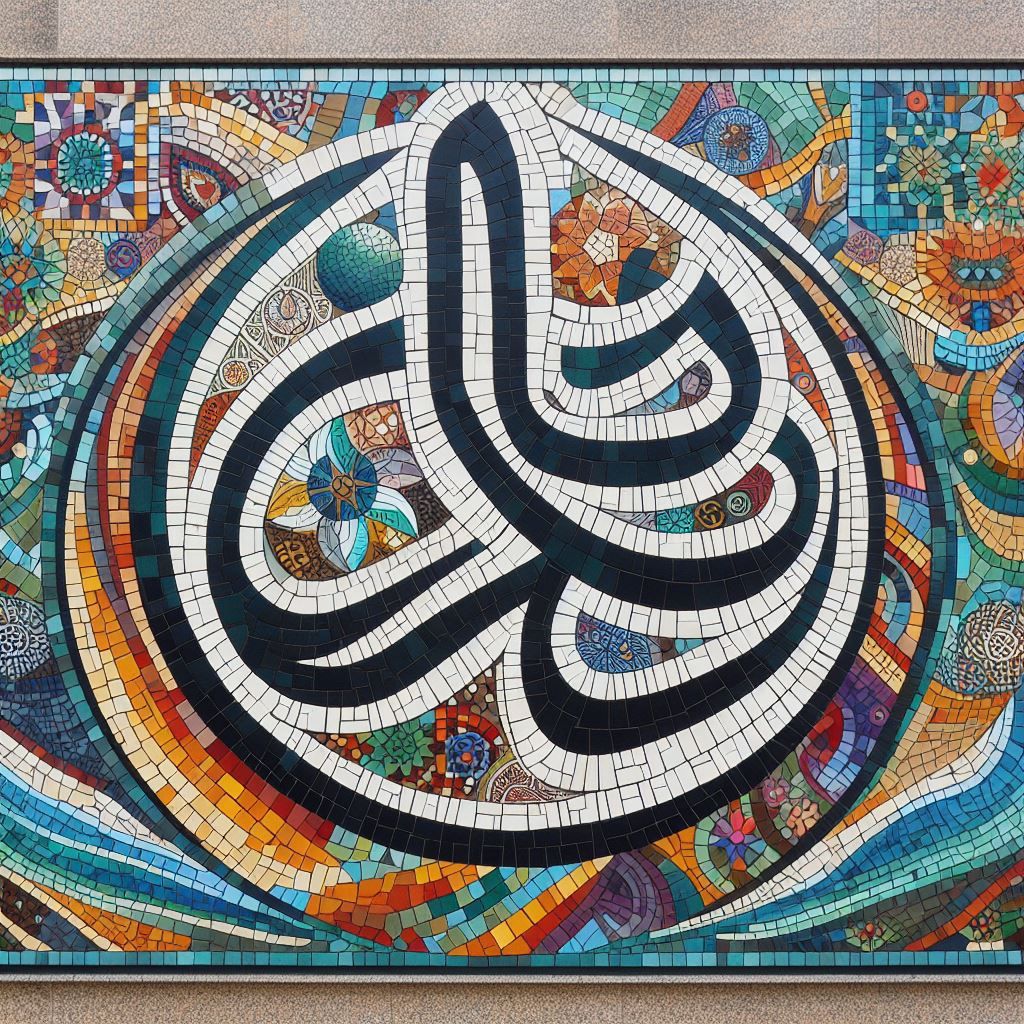
The name “السَّلاَمُ” (As-Salam) holds profound significance in Islamic theology, portraying Allah as the ultimate source of peace and perfection. As-Salam encapsulates the divine attribute of flawless peace, indicating that genuine serenity and harmony stem from acknowledging and remembering God.
In the Holy Quran, Allah is referred to as “As-Salam,” translating to “The Source of Peace” (Surah Al-Hashr, 59:23). This divine attribute emphasizes that peace extends beyond the absence of conflict, encompassing comprehensive well-being and perfection derived from God. It transcends human understanding, embodying flawless tranquility free from disturbance or disorder.
The Holy Prophet Muhammad (peace be upon him) exemplified this divine attribute by advocating for peace and instructing his followers to greet one another with “As-Salamu Alaikum,” meaning “Peace be upon you.” His teachings underscored the significance of peace, compassion, and kindness towards all creation, emphasizing that peace is not only a state of tranquility but also a moral and spiritual fulfillment.
Hazrat Mirza Ghulam Ahmad, the Promised Messiah, and founder of the Ahmadiyya Muslim Community emphasized the importance of universal compassion, stating that a religion devoid of compassion is incomplete. He urged his followers to embrace harmony with people of all faiths and backgrounds, fostering mutual respect and understanding.
Continuing this legacy, Hazrat Mirza Bashiruddin Mahmud Ahmad, the second Caliph of the Ahmadiyya Muslim Community, advocated for peace and reconciliation, promoting dialogue over force or violence. His teachings highlight that lasting peace requires patience, tolerance, and the pursuit of justice.
The Tafsir-e-Kabir, authored by Hazrat Mirza Bashiruddin Mahmud Ahmad, offers a comprehensive analysis of the Quran, integrating theology, jurisprudence, history, and science. It explores the interconnectedness of peace with divine attributes, providing insights into fostering peace within oneself and society.
Social science and sociology complement these teachings by offering frameworks to analyze societal structures and behaviors. These disciplines help understand the societal importance of peace and its manifestations in different cultures, guiding efforts to promote harmony and resolve conflicts.
Hazrat Mirza Masroor Ahmad, the fifth Caliph of the Ahmadiyya Muslim Community, continues to advocate for peace, education, and women’s rights. His leadership exemplifies the principles of Islam, emphasizing compassion, education, and service to humanity.
In conclusion, embracing As-Salam leads to inner peace, strengthens familial bonds, fosters community cohesion, and promotes societal harmony. Through the teachings of Islam and the guidance of leaders like Hazrat Mirza Masroor Ahmad, humanity can strive towards a world characterized by peace, respect, and perfection.
 Radio VOIB