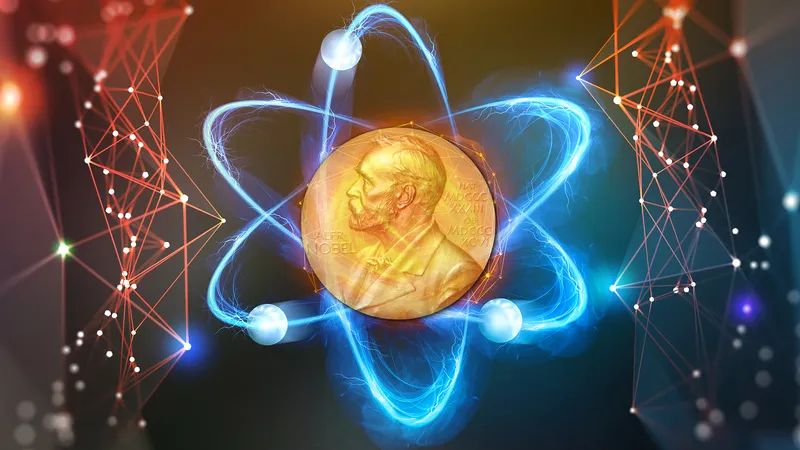
2023 Nobel Prize in Physics: A Journey into Attosecond Science
The 2023 Nobel Prize in Physics honors the pioneering work of Pierre Agostini, Ferenc Krausz, and Anne L’Huillier for their development of experimental methods that generate attosecond pulses of light, enabling the study of electron dynamics in matter. Their groundbreaking contributions have opened new frontiers in understanding the fundamental behavior of electrons, which play a crucial role in chemical reactions and the properties of materials.
Attosecond Pulses: Probing the Ultrafast
Agostini, Krausz, and L’Huillier’s work centers on attosecond pulses of light—bursts lasting just quintillionths of a second (10^-18 seconds). These ultrashort pulses have made it possible to observe and study the motion of electrons in real-time. Previously, the incredible speed of electron dynamics made such observations seem unattainable.
By harnessing these attosecond pulses, scientists can now capture snapshots of electrons as they move and rearrange during chemical reactions. This capability reveals the intricate dance of subatomic particles that underpins the very fabric of matter. The insights gained from this research have profound implications across fields like materials science, nanotechnology, quantum computing, and energy research.
Pioneers of Attosecond Science
The Nobel laureates have been at the forefront of attosecond science since its inception. Pierre Agostini and Anne L’Huillier, both from France, conducted pioneering research at the French Atomic Energy and Alternative Energy Commission (CEA) and the CNRS. Their work laid the foundations for generating attosecond pulses. Ferenc Krausz, an Austrian scientist at the Max Planck Institute for Quantum Optics, made seminal contributions to the characterization and control of these ultrashort light bursts.
Their collaborative efforts have not only advanced our understanding of the quantum world but also paved the way for potential applications in ultrafast electronics, high-resolution imaging, and the development of new materials with tailored properties.
Inspiring Future Generations
The recognition of Agostini, Krausz, and L’Huillier’s work coincides with the “Year of Physics” in France, an initiative aimed at promoting the study of physics and its importance in addressing societal challenges. Their Nobel Prize serves as an inspiration for young minds, showcasing the boundless potential of scientific exploration and the transformative power of curiosity-driven research.
As we delve deeper into the realm of attosecond physics, we unlock new possibilities for understanding and manipulating matter at its most fundamental level. This new era of scientific discovery and technological innovation is a testament to the power of human ingenuity and the relentless pursuit of knowledge.
A Broader Reflection
The groundbreaking work of the 2023 Nobel Laureates in Physics resonates deeply with the spiritual and intellectual traditions of various cultures and philosophies. For instance, the Quranic verse: “And of everything have We created pairs, that you may reflect” (51:49), highlights the intricate interplay of particles and their complementary counterparts. The study of electron dynamics, facilitated by the pioneering work of Agostini, Krausz, and L’Huillier, unveils the fundamental principles that underlie the fabric of creation.
The Holy Qur’an repeatedly exhorts mankind to ponder the signs of the universe: “Surely, in the creation of the heavens and the earth and the alternation of night and day, there are Signs for those who have understanding” (3:190). The attosecond pulses of light, generated through the experimental methods developed by the laureates, have opened new avenues for understanding the intricate dance of electrons, which lies at the heart of chemical reactions, material properties, and the essence of matter itself.
The pursuit of scientific inquiry and the quest for knowledge, as emphasized by Hazrat Mirza Bashiruddin Mahmud Ahmad, the Second Successor of the Promised Messiah (as), is central to the advancement of human understanding. The recognition of Agostini, Krausz, and L’Huillier’s groundbreaking contributions underscores the importance of exploring the intricate workings of the universe, aligning with the Ahmadiyya Muslim Community’s commitment to the advancement of knowledge.
As we explore the realm of attosecond physics, we not only unravel the mysteries of the quantum world but also fulfill the timeless quest to reflect upon the signs of the universe and seek knowledge throughout our lives. This pursuit of understanding the fundamental laws that govern the universe brings us closer to appreciating the intricate design and wisdom that permeates every aspect of creation.
 Radio VOIB