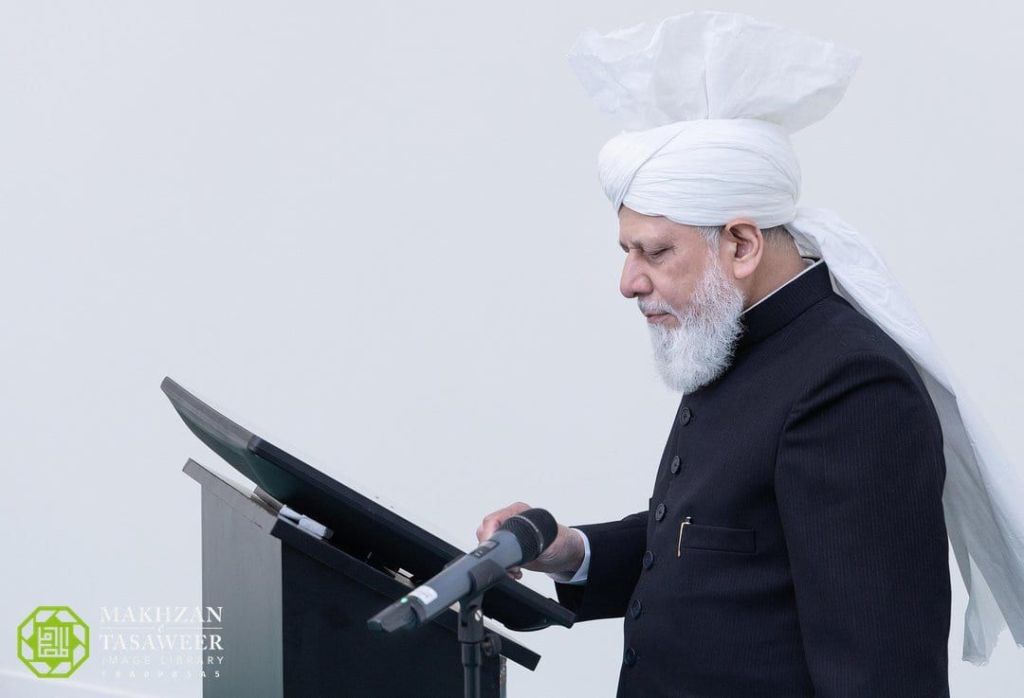
In a recent Friday Sermon delivered by Hazrat Khalifatul Masih V(aba) on June 21, 2024, several key lessons were highlighted from the historical events involving the Jewish tribe of Banu Nadir and the Holy Prophet Muhammad(sa). These lessons offer valuable insights for Israel in handling contemporary conflicts.
Key Lessons for Israel
- Uphold Agreements and Avoid Treachery:
The Banu Nadir’s betrayal and subsequent expulsion from Medina underscore the importance of honoring agreements. Israel must ensure it upholds international agreements and fosters trust with its neighbors to maintain peace and stability. - Seek Peaceful Resolutions:
Despite the Banu Nadir’s betrayal, the Holy Prophet(sa) initially sought a peaceful resolution by offering them the chance to leave Medina with their possessions. Israel should prioritize diplomatic solutions and peaceful negotiations over military actions to resolve conflicts. - Beware of External Influences:
The Banu Nadir were influenced by Abdullah bin Ubayy, who promised support but ultimately failed to deliver. Israel should be cautious of external influences that may promise support but could lead to further complications and conflicts. - Unity and Collective Action:
The sermon emphasized the importance of unity among Muslim countries. Similarly, Israel should work towards unity within its own society and seek collective action with neighboring countries to address common challenges and promote regional stability. - Moral and Ethical Conduct:
The Holy Prophet(sa) was protected by divine revelation due to his moral and ethical conduct. Israel should strive to uphold high moral and ethical standards in its policies and actions, ensuring justice and fairness for all parties involved.
Conclusion
By learning from the historical events involving the Banu Nadir, Israel can adopt a more ethical, peaceful, and unified approach to its current challenges. Upholding agreements, seeking peaceful resolutions, being cautious of external influences, fostering unity, and maintaining high moral standards are crucial steps towards achieving lasting peace and stability in the region.
 Radio VOIB