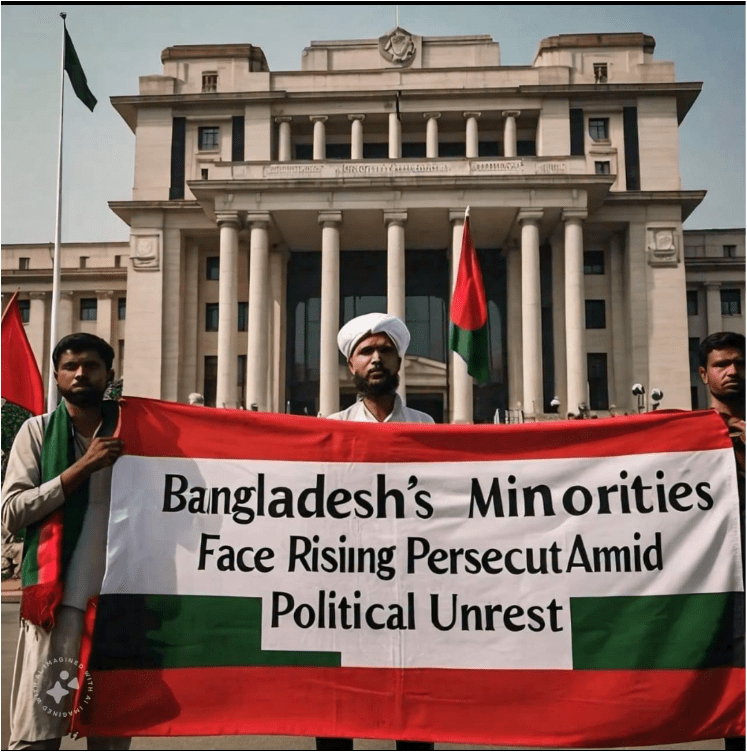
In recent years, Bangladesh has faced a disturbing rise in the persecution of its minority communities. This troubling trend undermines the nation’s celebrated legacy of diversity and resilience. Among the affected are Hindus, Buddhists, Christians, and Ahmadis—a sect of Islam often targeted for their beliefs. This editorial explores the intersection of religious persecution and social justice in Bangladesh, drawing on Quranic principles, the Ahmadiyya perspective, and contemporary human rights standards.
The Holy Quran explicitly advocates for justice and the protection of all individuals, regardless of their faith. One key verse states:
“O you who have believed, be persistently standing firm in justice, witnesses for Allah, even if it be against yourselves or parents and relatives. Whether one is rich or poor, Allah is more worthy of both.” (Quran 4:135)
This verse mandates that justice should be upheld impartially, irrespective of personal biases or societal pressures. The Quranic message calls for the fair treatment of all people, emphasizing that justice must prevail even in the case of minorities.
“The Quran commands us to uphold justice universally. It is not just a moral obligation but a divine requirement. Justice for minorities is as crucial as justice for any other group. The protection of religious minorities, including Ahmadis, aligns with the broader Islamic principle of fairness and compassion.”
Ahmadiyya scholars emphasize that the protection of minorities, including Ahmadis, is integral to the Quranic vision of a just society. This perspective highlights the importance of safeguarding religious freedoms and ensuring that all communities can practice their faith without fear.
In the contemporary global context, the principles of justice and equality are recognized as fundamental human rights. The Universal Declaration of Human Rights (UDHR) reinforces these values:
“Everyone is entitled to all the rights and freedoms set forth in this Declaration, without distinction of any kind, such as race, color, sex, language, religion, political or other opinion, national or social origin, property, birth or other status.”
These modern human rights standards align with Quranic and Ahmadiyya teachings, advocating for the protection of minority rights and the promotion of social justice. The global human rights community emphasizes the importance of protecting all individuals, including religious minorities, from persecution and discrimination.
For Bangladesh, addressing the challenges faced by minorities—particularly Ahmadis, who have faced significant persecution—is critical. Ensuring that all religious groups can practice their beliefs freely requires a multifaceted approach:
1. Legal Protections: Strengthening laws that protect minorities and ensuring their effective implementation is essential. This includes addressing hate crimes and discrimination.
2. Educational Initiatives: Promoting education about religious tolerance and the importance of diversity can help combat prejudices and foster a culture of respect.
3. Community Engagement: Dialogues between different religious and cultural groups can build mutual understanding and promote social cohesion.
4. Support for Victims: Providing support and protection for victims of religious persecution, including Ahmadis, is crucial in restoring justice and ensuring safety.
In conclusion, the principles of justice articulated in the Holy Quran and supported by contemporary human rights frameworks provide a clear mandate for the protection of minorities, including Ahmadis. Bangladesh’s path to social justice involves a collective commitment to these principles, ensuring that every individual, regardless of their background, can live with dignity and security. By adhering to these values, Bangladesh can uphold its legacy of diversity and create a more inclusive and just society.
 Radio VOIB