In today’s divisive world, the need for justice tempered with mercy resonates as a universal principle. This principle was exemplified and immortalized through a critical historical moment described in Hazrat Mirza Masroor Ahmad’s (aba) recent Friday Sermon on October 25, 2024. His Holiness reflected on the handling of the Banu Quraizah tribe after their breach of trust, drawing lessons for Muslims and humanity at large.
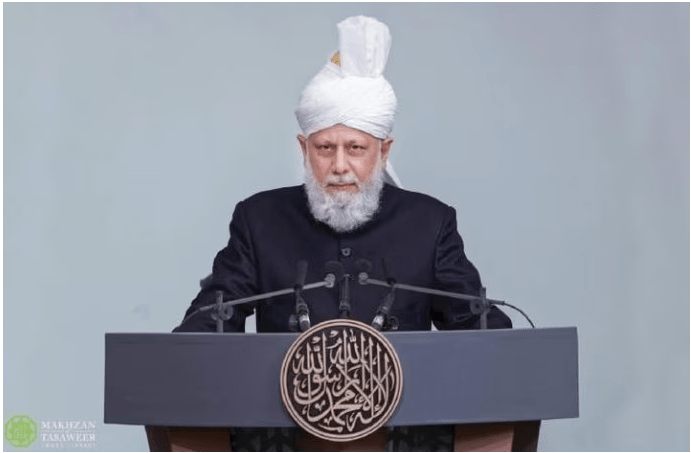
The verdict issued after the siege of Banu Quraizah was one of the most delicate moments in early Islamic history. Appointed as the arbitrator, Hazrat Sa’d bin Mu’adh (ra) ruled that the combatant men of Banu Quraizah would be executed, while their women and children would be held captive. His decision, affirmed by the Holy Prophet Muhammad (sa), underlines the severity of betrayal and treachery in a society where alliances and trust were paramount. This was not a decision driven by personal vendetta or impulse; rather, it emerged from a place of divine justice. As Hazrat Mirza Masroor Ahmad (aba) emphasized, the Prophet Muhammad (sa), despite being a “Mercy for All Mankind,” did not influence or interfere with the decision. The responsibility fell to Hazrat Sa’d, who based his judgment on justice, distancing himself from the pleas of his tribe.
Many interpret the outcomes of Banu Quraizah’s actions as a lesson in divine justice. As Hazrat Mirza Bashir Ahmad (ra) wrote, “…this was a Divine Decree” manifesting through Hazrat Sa’d (ra). The Prophet Muhammad’s (sa) reaction, saddened by the fate of the Banu Quraizah, speaks to his profound compassion. He uttered regretfully, “If only ten men had believed in me, I would have hoped to God that this entire nation would accept me.”
Despite the harsh realities of justice, the Prophet Muhammad (sa) remained compassionate, providing sustenance to the captives and showing mercy to individuals. His conduct toward women and children—such as not separating young siblings or mothers from their children—reflected his deep concern for their welfare and a profound respect for family bonds, even among those who opposed him.
The lessons from Hazrat Mirza Masroor Ahmad’s (aba) sermon call Muslims today to reflect on justice, unity, and compassion. In a time when conflicts often pit brother against brother, the essence of mercy that permeated the Prophet Muhammad’s (sa) actions reminds us to value life, uphold alliances, and seek peace within our communities. The divine justice served upon the Banu Quraizah was not simply an event of retribution but a manifestation of accountability, a necessary outcome for societal integrity.
His Holiness prayed for wisdom and compassion among Muslims, urging unity as a moral obligation and as a vehicle to restore the dignity of Islam. In a modern world torn by political and ideological divisions, this message is as relevant today as it was fourteen centuries ago—a testament to the enduring relevance of divine justice, mercy, and unity.
In today’s divisive world, the need for justice tempered with mercy resonates as a universal principle. This principle was exemplified and immortalized through a critical historical moment described in Hazrat Mirza Masroor Ahmad’s (aba) recent Friday Sermon on October 25, 2024. His Holiness reflected on the handling of the Banu Quraizah tribe after their breach of trust, drawing lessons for Muslims and humanity at large.
The verdict issued after the siege of Banu Quraizah was one of the most delicate moments in early Islamic history. Appointed as the arbitrator, Hazrat Sa’d bin Mu’adh (ra) ruled that the combatant men of Banu Quraizah would be executed, while their women and children would be held captive. His decision, affirmed by the Holy Prophet Muhammad (sa), underlines the severity of betrayal and treachery in a society where alliances and trust were paramount. This was not a decision driven by personal vendetta or impulse; rather, it emerged from a place of divine justice. As Hazrat Mirza Masroor Ahmad (aba) emphasized, the Prophet Muhammad (sa), despite being a “Mercy for All Mankind,” did not influence or interfere with the decision. The responsibility fell to Hazrat Sa’d, who based his judgment on justice, distancing himself from the pleas of his tribe.
Many interpret the outcomes of Banu Quraizah’s actions as a lesson in divine justice. As Hazrat Mirza Bashir Ahmad (ra) wrote, “…this was a Divine Decree” manifesting through Hazrat Sa’d (ra). The Prophet Muhammad’s (sa) reaction, saddened by the fate of the Banu Quraizah, speaks to his profound compassion. He uttered regretfully, “If only ten men had believed in me, I would have hoped to God that this entire nation would accept me.”
Despite the harsh realities of justice, the Prophet Muhammad (sa) remained compassionate, providing sustenance to the captives and showing mercy to individuals. His conduct toward women and children—such as not separating young siblings or mothers from their children—reflected his deep concern for their welfare and a profound respect for family bonds, even among those who opposed him.
The lessons from Hazrat Mirza Masroor Ahmad’s (aba) sermon call Muslims today to reflect on justice, unity, and compassion. In a time when conflicts often pit brother against brother, the essence of mercy that permeated the Prophet Muhammad’s (sa) actions reminds us to value life, uphold alliances, and seek peace within our communities. The divine justice served upon the Banu Quraizah was not simply an event of retribution but a manifestation of accountability, a necessary outcome for societal integrity.
His Holiness prayed for wisdom and compassion among Muslims, urging unity as a moral obligation and as a vehicle to restore the dignity of Islam. In a modern world torn by political and ideological divisions, this message is as relevant today as it was fourteen centuries ago—a testament to the enduring relevance of divine justice, mercy, and unity.
 Radio VOIB