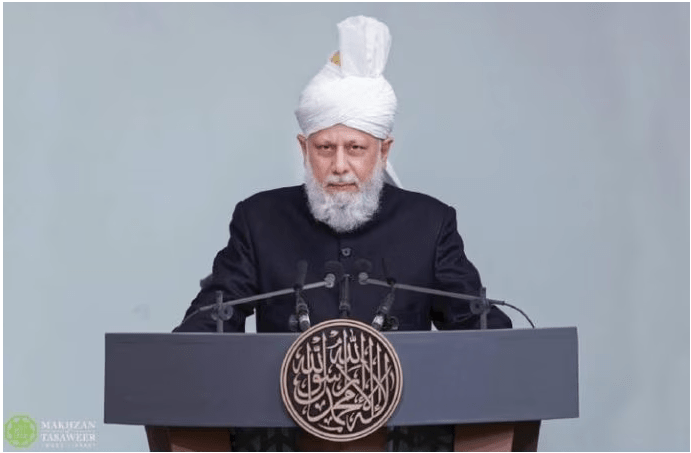
In a world driven by material wealth, Hazrat Mirza Masroor Ahmad, the Khalifatul Masih V, brings to light a profound perspective on financial sacrifice that resonates beyond religious boundaries. His recent sermon on November 8, 2024, emphasized that financial giving, as exemplified by the Ahmadiyya Muslim Community’s Tahrik-e-Jadid initiative, offers a unique path to spiritual fulfillment, social cohesion, and inner contentment—a model that speaks volumes to both spiritual and sociological frameworks.
The concept of financial sacrifice, as outlined by His Holiness, is not merely a transaction but an embodiment of selflessness and a deep commitment to community. Sociology, which examines social behavior and institutions, provides insight into the power of such acts. In the context of Ahmadi Muslims worldwide, financial contributions are made not with the expectation of worldly gain but out of devotion to faith and a collective purpose. Sociology underscores the importance of this social behavior: acts of generosity foster trust, strengthen community bonds, and create a shared identity.
In stark contrast to the prevailing ethos of self-interest and wealth accumulation, the Ahmadiyya Community’s collective acts of financial sacrifice challenge contemporary notions of success. Where modern society often measures achievement by personal gain, Ahmadi Muslims redefine it through voluntary contributions toward collective well-being. This sacrificial behavior aligns with Durkheim’s theory of altruism, where moral obligations to the group surpass individual desires, resulting in a cohesive and resilient community. This is evident as Ahmadi Muslims contribute regardless of their financial status, with individuals from both affluent and modest backgrounds making significant sacrifices.
At the heart of Tahrik-e-Jadid is the idea that financial sacrifice is not just about monetary value but the intention behind it. His Holiness cited various cases, from the Tanzanian businessman to the student from Dallas, each of whom willingly gave from their limited means, driven by the belief in divine reciprocity and blessings. Sociological studies have long highlighted how such altruistic behaviors lead to a “helper’s high,” where individuals experience enhanced mental well-being, satisfaction, and fulfillment. For these contributors, financial sacrifice is a source of inner peace, transcending mere material loss.
From a spiritual perspective, Hazrat Mirza Masroor Ahmad (aba) describes sacrifice as a means of earning the pleasure of God. The Qur’anic verse he referenced, “Those who spend their wealth by night and day, secretly and openly, have their reward with their Lord” (Qur’an 2:275), captures the essence of this act. It is a reminder that true reward is found not in recognition but in humility and sincere intention. This philosophy is shared across many spiritual traditions where giving, especially in secrecy, is seen as a pure act of devotion.
Additionally, His Holiness emphasized the ethical principle of not seeking personal favor in return for financial contributions, which deepens the spiritual value of the sacrifice. In a world where transactional relationships dominate, the Ahmadiyya Community’s ethos of no-expectation giving presents a counter-narrative that is both spiritually and socially profound.
In examining the Ahmadiyya Community’s tradition of financial sacrifice, His Holiness also reflected on its far-reaching impact. Over the past year, despite global financial challenges, the community contributed a remarkable £17.98 million, a testament to the unity and dedication that Tahrik-e-Jadid fosters across continents. Such contributions, made by both seasoned members and new converts, demonstrate how selfless giving is a powerful means of aligning individual purpose with a shared mission, inspiring a generation to transcend personal limitations for a greater cause.
Ultimately, the message of Tahrik-e-Jadid is a reminder of the transformative potential of financial sacrifice. It is a model that stands as a beacon of hope for a world caught in the tide of consumerism, inviting individuals and communities alike to redefine success not by accumulation but by contribution. This call to financial sacrifice is not solely an economic contribution; it is an act that enriches the soul, strengthens the social fabric, and aligns with a vision of collective prosperity and inner peace.
As His Holiness aptly conveyed, those who embrace this spirit of sacrifice live without fear or regret, blessed with a faith that sustains them through life’s challenges. This narrative, woven through spiritual teachings and sociological principles, underscores a universal truth: that in giving selflessly, we find both purpose and profound fulfillment.
Here are the key lessons one can learn from this sermon, particularly in relation to Ahmadiyyat, sociology, and broader disciplines:
- Financial Sacrifice as a Moral Practice: Ahmadiyyat emphasizes that financial sacrifice is not just an economic transaction but a spiritual and moral endeavor that builds selflessness, gratitude, and contentment. Sacrificing wealth to benefit others aligns with a higher ethical standard, urging believers to prefer the welfare of the community over personal material gains.
- Social Solidarity and Unity: This sermon showcases the power of collective action. By pooling resources, the Ahmadiyya Muslim Community is able to assist in global and local initiatives, whether through humanitarian efforts, spreading religious teachings, or community projects. This model of communal giving reflects sociological principles of unity, creating resilience through shared purpose and sacrifice.
- Sociology of Altruism: The stories from across the world highlight the sociology of altruism, where people willingly undergo personal hardships, like reduced personal spending, for the benefit of a larger cause. Members from different socio-economic backgrounds contribute within their means, setting an example of altruism that is practical and impactful.
- Economic Perspective on Wealth and Charity: From an economic standpoint, the sermon redefines wealth as a means to serve a divine purpose rather than an end for personal enjoyment. This ideology challenges capitalist norms of wealth accumulation, advocating instead for a redistribution that promises spiritual and practical rewards, such as peace, contentment, and community respect.
- Role of Faith in Psychological Resilience: Many examples shared in the sermon illustrate how faith encourages resilience. Believers who sacrifice are portrayed as experiencing reduced fear, worry, and enhanced contentment, which aligns with psychological theories suggesting that meaning-making and purpose reduce anxiety and improve mental well-being.
- Cross-Cultural Lessons in Generosity: The sermon provides insights into cultural diversity within the Ahmadiyya community, illustrating that despite different backgrounds, countries, and socio-economic statuses, members share the value of generosity. This cross-cultural generosity emphasizes a universal ethical principle that transcends cultural boundaries.
- Youth Empowerment and Responsibility: By mentioning young people inspired to contribute, the sermon demonstrates the emphasis Ahmadiyyat places on empowering youth. Engaging youth in financial sacrifice and service fosters responsibility, a strong moral compass, and a commitment to community building.
- Sociological Perspective on Voluntary Simplicity: Voluntary simplicity—a conscious choice to limit one’s consumption—encourages members to focus on their spiritual lives and community well-being rather than personal luxuries. This value aligns with sociological theories that suggest a simplified lifestyle can reduce stress, foster mental clarity, and strengthen community bonds.
- Interconnectedness of Material and Spiritual Well-being: The sermon suggests that financial sacrifices result in both material and spiritual rewards, blurring the boundary between the two. In a broader sense, it proposes a model where material well-being is closely tied to spiritual health, which challenges the secular separation of economic and spiritual pursuits.
- Inspiration through Real-life Examples: By sharing real stories from around the world, His Holiness underscores the importance of role models. Sociologically, this sharing of stories creates a narrative that inspires others, builds identity within the community, and promotes behavioral standards that align with the teachings of Ahmadiyyat.
In sum, the sermon demonstrates how financial sacrifice in Ahmadiyyat is multidimensional, blending spirituality with social ethics, economic generosity with moral resilience, and fostering a global sense of unity that transcends boundaries and socio-economic divisions. These lessons can be applied broadly to understand how collective action, ethical economics, and altruism build a cohesive, resilient society.
 Radio VOIB