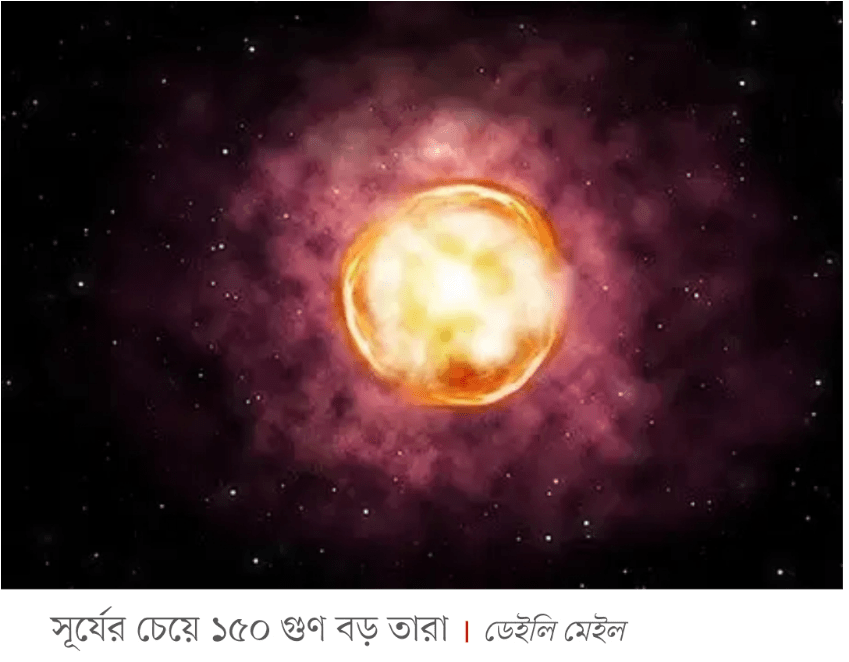
The universe, with its vast and unending marvels, continues to beckon humanity toward contemplation and awe. Recent discoveries of a colossal star, approximately 150 times larger than our Sun, behaving in unprecedented ways, have stirred the minds of scientists and stargazers alike. This star, exhibiting pulsational pair-instability (PPI), appears to “hiccup,” releasing cosmic energy and matter into the expanse of space—a phenomenon now observed directly for the first time.
But beyond the science lies a deeper call to reflect on creation’s grandeur, as echoed in the teachings of the Ahmadiyya Muslim Community, which invites us to view such celestial events as signs of God’s magnificence and reminders of human responsibility.
—
A Star’s Last Symphony: The Science of Pulsational Pair-Instability
Massive stars, like the one observed in the spiral galaxy NGC 2981, are not merely luminous giants; they are laboratories of creation. These stars, when nearing the end of their lives, undergo pulsational pair-instability—a process where the intense heat in their cores creates electron-positron pairs, leading to contractions and explosive eruptions.
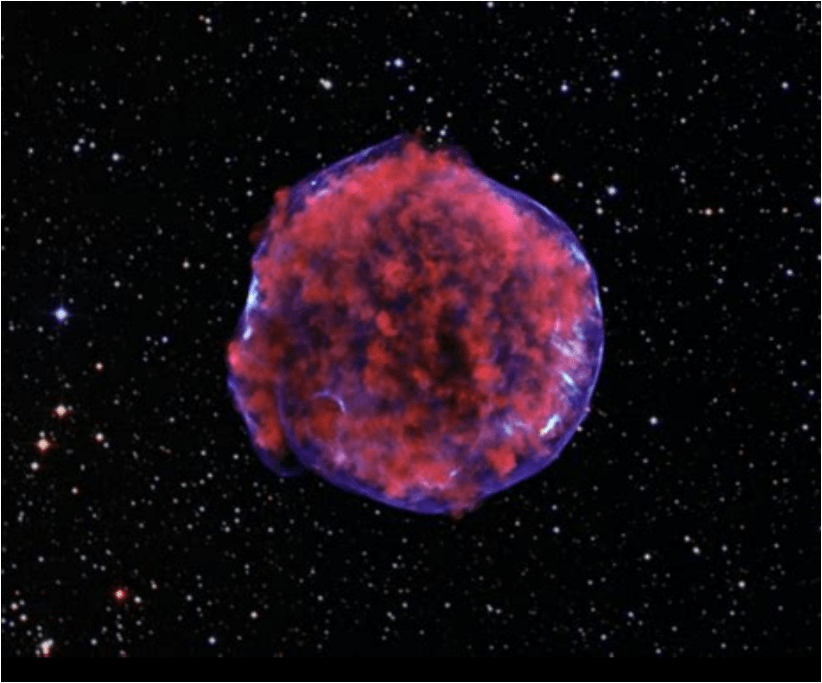
This process repeats as the star sheds its outer layers in bursts of light and energy, much like a final symphony before its inevitable collapse into a black hole or a supernova explosion. In this case, astronomers were astounded when SN2020scc, a supernova in this galaxy, re-illuminated—a rare and breathtaking event.
—
Through the Lens of Revelation
From the perspective of the Ahmadiyya Muslim Community, such celestial phenomena are not random occurrences but divine signs, drawing humanity closer to the Creator. Hazrat Mirza Ghulam Ahmad (as), the Promised Messiah and founder of the Ahmadiyya movement, often emphasized that the universe is a grand testament to God’s existence and omnipotence.
The Holy Qur’an, in Chapter 67, Verse 4, states:
> “Then look again and yet again, your sight will only return to you confused and fatigued.”
This verse challenges humanity to explore and reflect upon the perfection and intricacies of the cosmos. The pulsations of this massive star—its rhythm of contraction and expansion—resemble the heart of a living being, reminding us of the interconnectedness of creation and the divine wisdom behind it.
—
A Cosmic Reminder for Humanity
The “hiccups” of this giant star serve as a metaphor for human life: moments of expansion and contraction, joy and hardship. Just as the star releases elements that enrich the cosmos, our struggles and triumphs contribute to the collective growth of humanity.
Ahmadiyyat teaches that these signs in the heavens should inspire us to transcend material pursuits and strive for spiritual elevation. In the words of Hazrat Mirza Tahir Ahmad (rh), the fourth Khalifa of the Ahmadiyya Community:
> “The study of nature is not merely a scientific endeavor but a spiritual journey leading to God.”
—
Mobilizing Action: From Awe to Responsibility
This discovery is not just an invitation to wonder but also a call to action. The universe, in its intricate balance, mirrors our own interconnected existence. As we marvel at the celestial dance of this giant star, we are reminded of our duty to preserve the delicate equilibrium of our planet.
The Ahmadiyya Muslim Community has long championed initiatives that bridge science and faith, advocating for environmental stewardship, education, and the pursuit of knowledge as acts of worship.
—
The Final Message of a Dying Star
As the light of SN2020scc fades into the cosmic abyss, it leaves behind a legacy of inspiration—a call to reflect on our place in the universe and our responsibilities toward one another. In the words of the Holy Qur’an (Chapter 55, Verse 8):
> “And the heaven He has raised high, and He has set up the balance.”
Let this celestial marvel awaken in us a balance between scientific curiosity and spiritual introspection, urging us to live lives of purpose, wonder, and service to humanity.
In the dance of this dying star, we find not only the beauty of creation but also the enduring message of faith: that the universe, in all its vastness, is a mirror reflecting the greatness of its Creator.

 Radio VOIB