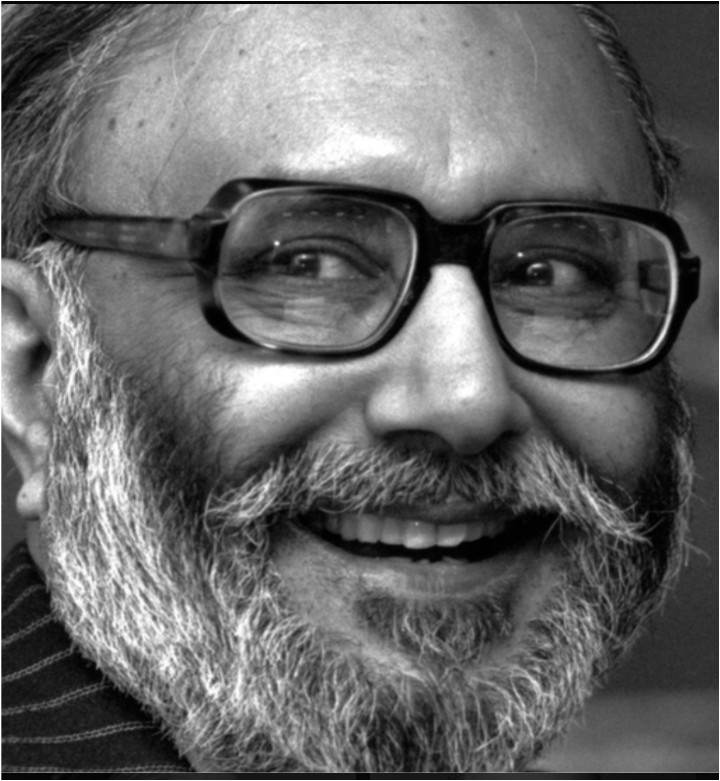
Professor Abdus Salam: The Forgotten Genius Who Gave the World a New Universe
In the grand narrative of science, where names like Einstein, Feynman, and Bohr shine bright, there exists a luminary whose contributions shaped modern physics but whose recognition remains painfully dim in his homeland. Professor Abdus Salam, Pakistan’s first and only Nobel Laureate in Science, was not just a physicist; he was a visionary who dared to dream beyond the limits of time and space. His groundbreaking work in electroweak unification—a theory that connects two fundamental forces of nature—forever changed the way we understand the universe. Yet, his story is as much about scientific brilliance as it is about tragedy, exile, and an unfulfilled homecoming.
A Village Boy with a Universe in His Mind
Abdus Salam was born in 1926 in Jhang, a small town in British India (now Pakistan). From an early age, he displayed an extraordinary intellect. At just 14 years old, he scored the highest ever recorded marks in Punjab University’s matriculation exams, a feat that instantly set him apart. But Salam was not just another prodigy—he was an unstoppable force of nature.
With a scholarship, he traveled to Cambridge University, where he immersed himself in the mysteries of physics. There, he encountered the wonders of quantum mechanics and relativity, two pillars of modern physics. The equations that described the universe seemed like poetry to him—mathematical expressions that whispered secrets about the cosmos.
The Discovery That Changed Everything
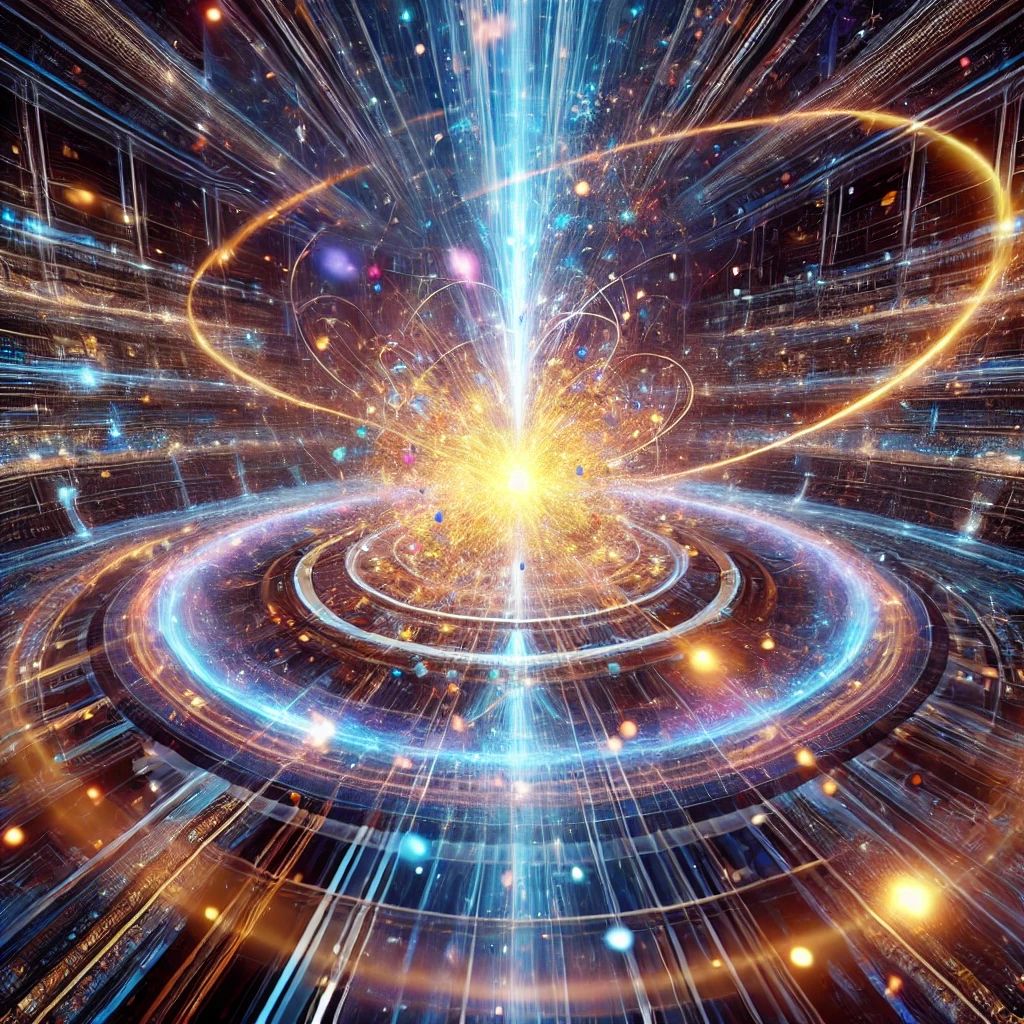
Fast forward to 1979, a defining year in scientific history. Abdus Salam, along with Sheldon Glashow and Steven Weinberg, was awarded the Nobel Prize in Physics for their work on electroweak unification—a theory that showed how two of the four fundamental forces of nature (the electromagnetic force and the weak nuclear force) are actually different manifestations of a single force.
This was nothing short of revolutionary. It paved the way for what is now known as the Standard Model of Particle Physics, which later helped scientists predict the Higgs boson (the “God Particle”). Without Salam’s contributions, the modern understanding of physics would be incomplete.
Imagine this: if Einstein gave us relativity, Salam helped stitch the fabric of the universe together, proving that forces we thought were separate were, in fact, one and the same.
A Scientist in Exile: Betrayed by His Own Nation
But despite his unparalleled contributions, Abdus Salam was never fully accepted in Pakistan. His identity as an Ahmadi Muslim—a minority group facing severe persecution—meant that his own country refused to celebrate him. In 1974, the Pakistani government declared Ahmadis as non-Muslims, and this shattered Salam. Though he had tirelessly worked to build Pakistan’s scientific institutions, his contributions were ignored, his name erased from textbooks, and his legacy buried under political and religious bias.
Heartbroken, he left for Italy, where he established the International Centre for Theoretical Physics (ICTP) in Trieste—a sanctuary for young scientists from developing countries who, like him, had big dreams but limited opportunities. His mission was simple: give the Global South a place in the future of science.
A Final Homecoming That Never Was
Even in exile, Salam never stopped loving Pakistan. He carried the soil of his homeland in his pockets and longed for a day when science, not sectarianism, would define his country’s future. But when he passed away in 1996, his funeral was muted, his tombstone defaced, and his contributions ignored.
Yet, history has a way of reclaiming its lost heroes. Today, scientists worldwide recognize Abdus Salam as one of the greatest physicists of the 20th century. His theories continue to shape modern physics, and his vision for scientific progress in developing nations still inspires millions.
The Lesson of Abdus Salam: Science Knows No Borders
The story of Abdus Salam is not just the story of a physicist—it is the story of genius overshadowed by prejudice, of brilliance dimmed by intolerance, of a mind that saw the unity of the universe but faced the disunity of humanity.
His life teaches us an uncomfortable but essential truth: great minds can emerge from anywhere, but whether we nurture them or neglect them determines our place in history. Today, as the world races toward the next scientific frontier—be it artificial intelligence, quantum computing, or space exploration—we must ask ourselves: How many Abdus Salams are we ignoring?
It is time to reclaim and celebrate the legacy of Professor Abdus Salam—not as a forgotten Pakistani, not as an exiled genius, but as what he truly was: a global scientist, a pioneer, and a guiding star in the infinite cosmos of human knowledge.
Potential Trending Social Media Headlines:
“The Forgotten Genius: Abdus Salam, Pakistan’s Uncelebrated Nobel Laureate”
“Science Knows No Borders: The Inspiring Legacy of Professor Abdus Salam”
“How Abdus Salam’s Work Shaped the Future of Physics – Yet His Own Country Erased Him”
“A Nobel Laureate in Exile: The Heartbreaking Story of Abdus Salam”
“Without Abdus Salam, There Would Be No ‘God Particle’ – Why Don’t We Talk About Him?”
 Radio VOIB