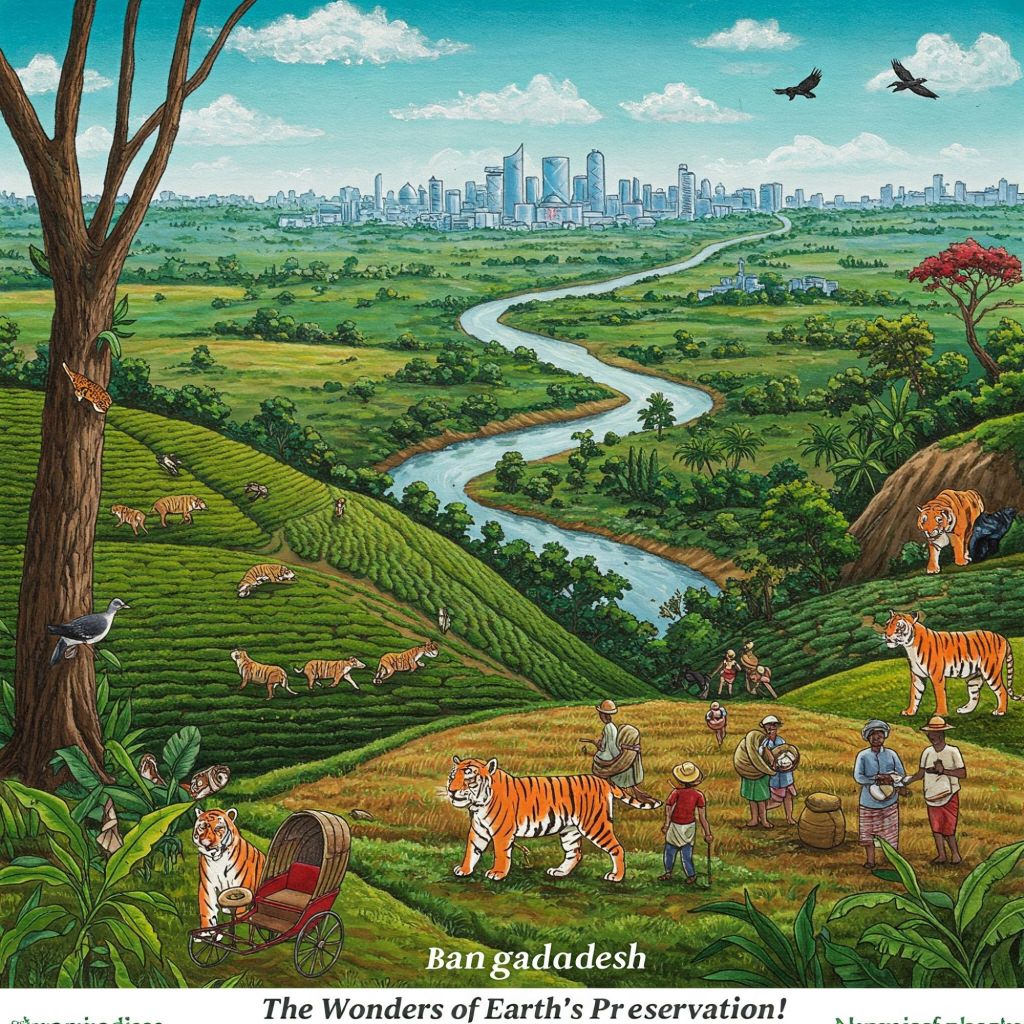
A Quranic Perspective on Ecological Harmony
In Surah Al-Kahf (18:7), Allah declares:
“Indeed, We have made that which is on the earth an adornment for it, that We may test them as to which of them is best in deed.”
This verse encapsulates a profound reality—our planet is not merely a static repository of resources but a dynamic, self-sustaining system of life. Everything upon it, from the towering mountains to the microscopic bacteria, contributes to a grand, interwoven tapestry of existence. This intricate balance is not incidental but a deliberate creation of the Divine, serving both as a test and a testimony to human responsibility.
The Earth’s Built-in Mechanisms of Sustainability
Modern ecological sciences reveal that Earth’s ecosystems are remarkably self-regulating. The hydrological cycle purifies and distributes water, forests act as carbon sinks, and oceans regulate temperature and oxygen levels. The interdependence of species in food chains ensures the recycling of nutrients, sustaining life in an almost miraculous equilibrium.
But this delicate balance is not independent of divine wisdom. Hazrat Mirza Ghulam Ahmad, the Promised Messiah (as), expounded that natural laws are aligned with spiritual laws. The resilience of nature reflects the deeper truth that Allah’s creation is inherently self-correcting, provided it is not recklessly disrupted by human negligence.
A Divine Test: The Ethics of Stewardship
Allah states that the adornment of the earth serves as a test to distinguish those who act righteously. This implies that humankind bears an immense moral responsibility. The misuse of natural resources, deforestation, pollution, and climate change signify moral failure, not just scientific challenges. Conversely, sustainable living, conservation efforts, and the responsible harnessing of resources mirror righteousness.
In the light of Ahmadiyyat, the test of human deeds is not restricted to rituals but extends to how we engage with the world around us. The Holy Prophet Muhammad (sa) emphasized moderation and respect for nature, stating: “Even if the Day of Judgment arrives and you have a sapling in your hand, plant it.” This narration underscores the eternal Islamic principle of sustainability and hope.
Signs of God in Nature: Recognizing the Creator Through Ecology
Nature itself is a grand book of revelation. Hazrat Mirza Tahir Ahmad (rh) often elaborated on how the intricate balance of ecosystems serves as undeniable proof of a higher intelligence. The synchronized migration of birds, the innate healing power of forests, and the resilience of aquatic ecosystems—all point towards a Creator who not only designed but actively sustains His creation.
The Quran invites us to reflect on these signs: “And there is no creature on the earth but that upon Allah is its provision…” (11:6). This verse asserts that sustenance is divinely managed, but human actions must align with this divine system rather than disrupt it.
Toward a Future of Harmonious Coexistence
The self-sustaining nature of the earth is both a divine gift and a responsibility. The lesson from Surah Al-Kahf (18:7) is clear: the world’s beauty and balance are tests for humankind. If we act as responsible stewards, we align ourselves with divine wisdom. If we exploit recklessly, we invite our own downfall.
The path forward is one of balance—using scientific advancements in harmony with spiritual wisdom. Ahmadiyyat champions the philosophy that true progress lies in syncing human actions with divine will. Thus, we must strive for a future where ecological mindfulness is not just an environmental concern but an act of worship, ensuring that the Earth remains a flourishing, self-sustaining testament to God’s grandeur.
Here is an in-depth article exploring the self-sustaining nature of the Earth in the light of Surah Al-Kahf, blending Quranic insights with ecological understanding. Let me know if you’d like any refinements or additions!
 Radio VOIB