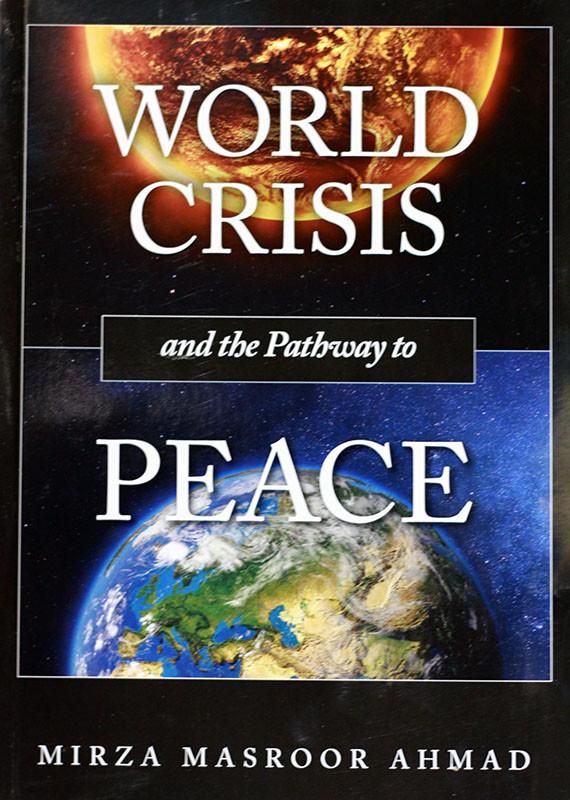
In a world shaking under the threat of conflict, where nations wield power against one another and humanity strives for justice amidst encroaching darkness, a timeless message from the Holy Qur’an resounds:
“وَمَا أَرْسَلْنَاكَ إِلَّا رَحْمَةً لِّلْعَالَمِينَ”
“And We have not sent you but as a mercy for all peoples.” (Surah Al-Anbiya 21:108)
Hazrat Mirza Masroor Ahmad (aba), the esteemed worldwide Head of the Ahmadiyya Muslim Community, has firmly established this verse as the foundation of his global call for peace. In his powerful addresses to world leaders, parliaments, think tanks, and faith communities, he boldly asserts that the Holy Prophet Muhammad (sa) is not just a prophet for Muslims; he is a divine gift of mercy to all of humanity.
Mercy Beyond Borders: A Global Mandate
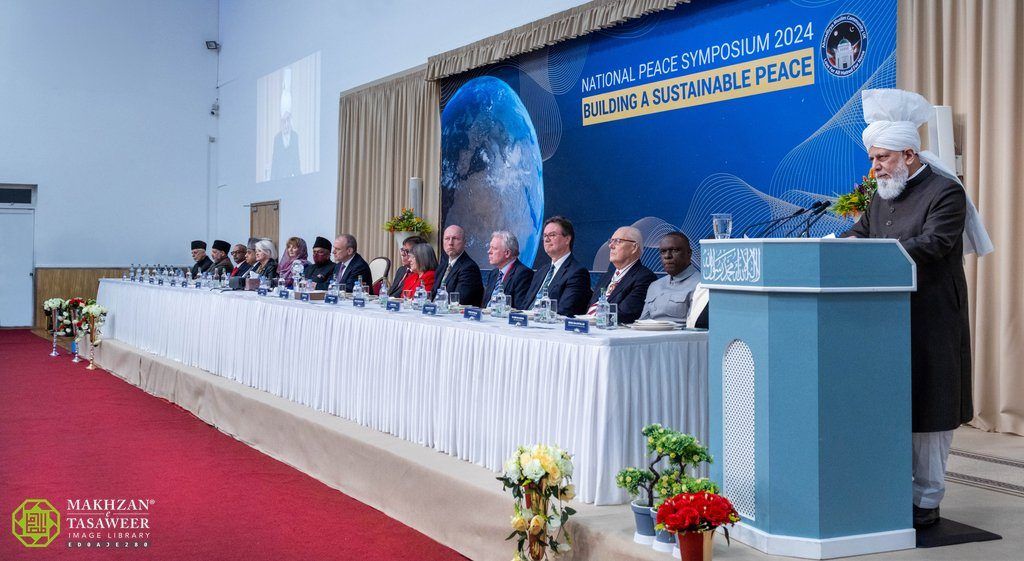
During his impactful address at the European Parliament in 2012, Hazrat Mirza Masroor Ahmad (aba) directly addressed the misconceptions that portray Islam as a religion of extremism. He stated:
> “The founder of Islam, the Holy Prophet Muhammad (peace be upon him), was sent as a ‘mercy for all mankind.’ His entire life serves as a testament to compassion, justice, tolerance, and humanity.”
The Khalifa effectively dismantles the notion that mercy is a passive concept. He emphasizes that true mercy is active justice that uplifts the weak, protects the rights of all individuals regardless of their beliefs, and boldly opposes tyranny.
This is the Rahmatul-lil-Alameen model: a strong and universal mercy that transcends ethnic, religious, and national boundaries, embracing friends and foes alike, the righteous and the errant.
The Prophetic Blueprint: Serving Both Friends and Foes
Hazrat Mirza Masroor Ahmad (aba) often refers to the exemplary conduct of the Prophet Muhammad (sa) during the Conquest of Mecca. When faced with the opportunity to take revenge for decades of persecution, boycotts, and warfare, the Holy Prophet (sa) chose to grant amnesty to his most ardent enemies.
Hazrat Mirza Masroor Ahmad (aba) reflects:
> “In that moment, he did not retaliate. Instead, he forgave. He walked with his head lowered in humility. He demonstrated what it means to be a mercy to the world.”
This act of forgiveness was not just words; it was a revolutionary diplomatic gesture that transformed a divided Arabian Peninsula into a foundation for peace.
Peace Through Justice: A Qur’anic Imperative
In his keynote address at Capitol Hill in 2012, Hazrat Mirza Masroor Ahmad (aba) stated clearly:
> “Without justice, there can never be peace.”
Rahmatul-lil-Alameen is not just about emotional empathy; it encompasses a structured approach to justice in areas such as law, economics, politics, and international relations. The Prophet of Islam (sa) teaches that:
– No Arab is superior to a non-Arab, and no white person is superior to a black person.
– The rights of enemies must also be safeguarded.
– A true Muslim is one from whom others are safe, both from their words and their actions.
This Qur’anic message calls for equal treatment, fair negotiation, and sincere respect in all human interactions—ranging from treaties and trade to refugee policies and religious freedoms.
The Khalifa’s Mission: Reviving the Prophetic Model
As the current Khalifa of the Promised Messiah (as), Hazrat Mirza Masroor Ahmad (aba) leads a thriving global community in over 200 nations. He does so without armies, weapons, or political power. Yet, his presence is felt in parliaments, international summits, and peace forums, where his moral clarity compels even the most hardened political leaders to reconsider their positions.
Why does he have this influence? Because he speaks not from political agendas; rather, he draws from the enduring legacy of the Qur’an’s message of mercy. He embodies the ethos of Rahmatul-lil-Alameen, advocating that every child, woman, refugee, non-believer, and nation deserves justice, security, and dignity.
He warns:
> “If we do not adopt the values of peace, justice, and compassion, the world is heading toward a colossal disaster—perhaps a Third World War. But Islam has shown us the path to avoid this. The Prophet of Islam (peace be upon him) is that beacon.”
Practical Steps for Today
Hazrat Mirza Masroor Ahmad (aba) has outlined clear, prophetic actions to integrate Rahmatul-lil-Alameen into the global order:
1. Protect religious freedom universally.
2. Ensure media reports are just and unbiased.
3. End arms races and prioritize education, health, and justice.
4. Empower those in power to stand for the weak rather than exploit them.
The Hour Demands a New Mercy
At this critical juncture, the world does not require a new ideology; it needs to return to the Prophet of Mercy (sa) as a model for policy, justice, and compassion—not merely as a historical figure, but as a guiding light for the future.
 Radio VOIB