By Saiful Islam
A Soul’s Cry or a Mind’s Silence?
The world today is restless. From the neon-lit towers of the West to the ascetic huts of the East, humanity seeks solace—some in material indulgence, others in self-denial. Amid this turmoil, two paths emerge: meditation and prayer. They may appear similar—both call for silence and both offer inner peace—but the seeker must ask: Do they both lead to God?
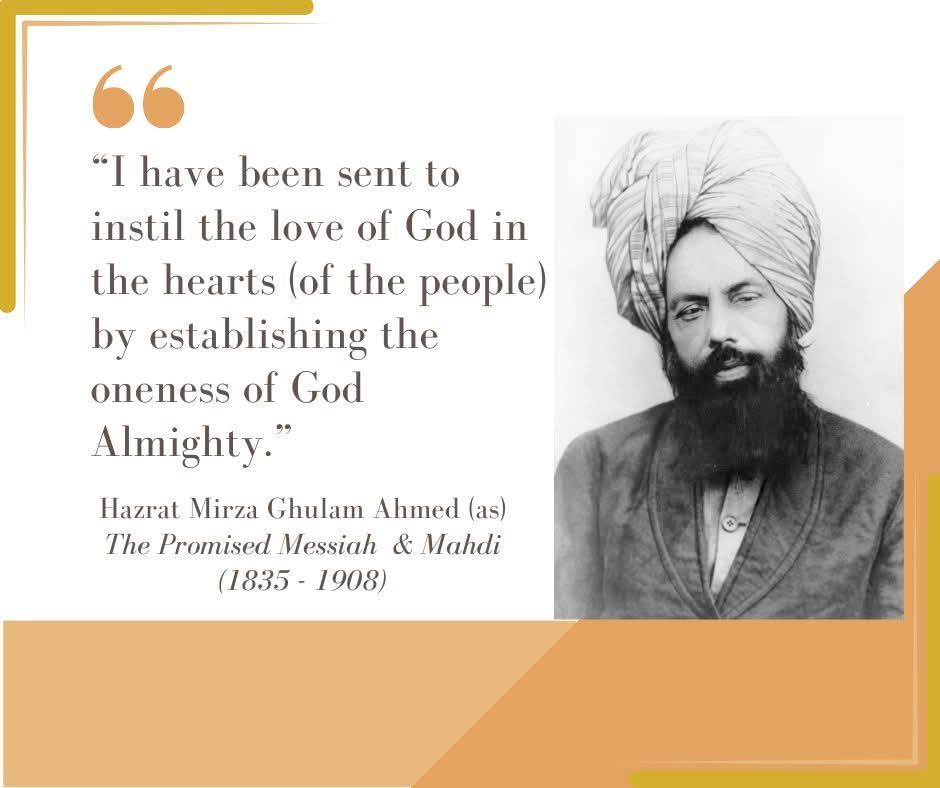
Hazrat Mirza Ghulam Ahmad, the Promised Messiah and Imam Mahdi (as) was not merely a sage but the divine voice raised by God in this era of confusion. He taught that a true connection with God is not born solely from human effort, but through divine descent—when the heart, trembling with sincerity, is embraced by the Living God. Let us explore the distinctions between meditation and prayer, guided by Qur’anic insight, the wisdom of the Promised Messiah (as), and the lens of modern science, to uncover how they differ in this sacred pursuit.The Nature of Connection: Self-Realization vs. Divine Recognition**
Meditation, as understood in various Eastern traditions, focuses primarily on the self—self-awareness, self-discipline, and self-liberation. It is an inward journey aimed at quieting the storm of thoughts. In anthropology and psychology, it has been studied as a neurocognitive practice capable of rewiring the brain’s prefrontal cortex to attain calm, focus, and even heightened consciousness.
However, this highlights the first distinction. The Qur’an declares:
“And your Lord says, ‘Call on Me; I will answer you.’” (Surah Ghafir 40:61)
Prayer (Salat or du‘ā) in Islam is not just an inward spiral toward silence, but a dialogue—intimate, pleading, and reciprocal. It is not the abandonment of thought but its highest elevation directed toward the Ultimate Other. Tafsir-e-Kabir explains that the essence of prayer lies not in the act itself but in the response—when God replies, guides, consoles, and sometimes distances.
Hazrat Mirza Ghulam Ahmad (as) writes in Barahin-e-Ahmadiyya:
“In true prayer, a light descending from heaven melts the heart. It creates a cleaving, a spiritual pain—a restlessness until the soul is lifted and God replies with the sweetness of His speech.”
Purpose and Philosophy: Liberation vs. Submission
The philosophical foundations of meditation and prayer diverge significantly. Meditation, particularly in Buddhism and Hinduism, aims for Moksha or Nirvana—freedom from suffering and release from the cycles of life and death. It often seeks an escape from existence. Sociology suggests that such views often develop in societies where the material world is considered inherently corrupt or illusory (maya).
In contrast, prayer in Islam, as revealed to the Holy Prophet Muhammad (sa), seeks Qurb Ilahi—nearness to God, not through escape, but through submission to His will. Prayer encourages engagement with the world through divine strength, rather than disengagement.
Hazrat Mirza Bashiruddin Mahmood Ahmad (ra), in his Five Volume Commentary, emphasizes that du‘ā (supplication) serves as the bridge between a weak creation and an Almighty Creator. It transforms man, not into an isolated monk, but into a divinely guided reformer.
The Social Function: Solitary Isolation vs. Collective Communion
From a sociological perspective, meditation is often a solitary practice. While it promotes personal mental health, it does not inherently build community or social transformation.
Conversely, prayer is both personal and communal. Salat in congregation unites people of all colours, tongues, and classes in a common act of submission. It acts as a social glue that cultivates collective morality, as Durkheim might observe.
Hazrat Mirza Ghulam Ahmad (as) taught that this collective spirituality is essential for the moral elevation of society:
“Man was not made for caves, but for the field of action. The true servant of God is he who prays not only for himself but for the reformation of the whole world.”
The Psychology of the Divine Encounter: Calm vs. Response
Modern psychology acknowledges that meditation reduces stress, lowers cortisol levels, and induces alpha-wave activity—a state of relaxation. However, it typically stops there, lacking empirical evidence of a divine voice replying.
In contrast, prayer, as taught by prophets, generates not just peace, but transformation. Hazrat Mirza Ghulam Ahmad (as) experienced a psychological metamorphosis through prayer—his claim as the Promised Messiah came after prolonged munajat (supplications) and divine visions. He recorded:
“He spoke to me as one speaks to a friend. He assured me: ‘You are with Me, and I am with you.’ What can meditation offer that can equal the ecstasy of hearing one’s Creator respond?”
The Qur’anic Paradigm: Meditation as Practice, Prayer as Fulfillment
Interestingly, Islam does not condemn silence or reflection. Tafakkur (deep reflection) is encouraged. However, this practice must lead to tadhakkur—remembrance of God. Tafsir-e-Kabir beautifully notes under Surah Al-A‘raf (7:205):
“Remember thy Lord in thy heart with humility and fear, and without the loudness of voice, in the mornings and in the evenings; and be not of those who are neglectful.”
In conclusion, while meditation may offer personal tranquillity and self-awareness, prayer transcends the individual and builds a dynamic relationship with God, fostering personal transformation and collective unity.
 Radio VOIB