✍️ Saiful Islam
In the name of Allah, the Gracious, the Merciful
“لَئِنْ شَكَرْتُمْ لَأَزِيدَنَّكُمْ” —
“If you are grateful, I will surely bestow more upon you.” (Surah Ibrahim, 14:8)
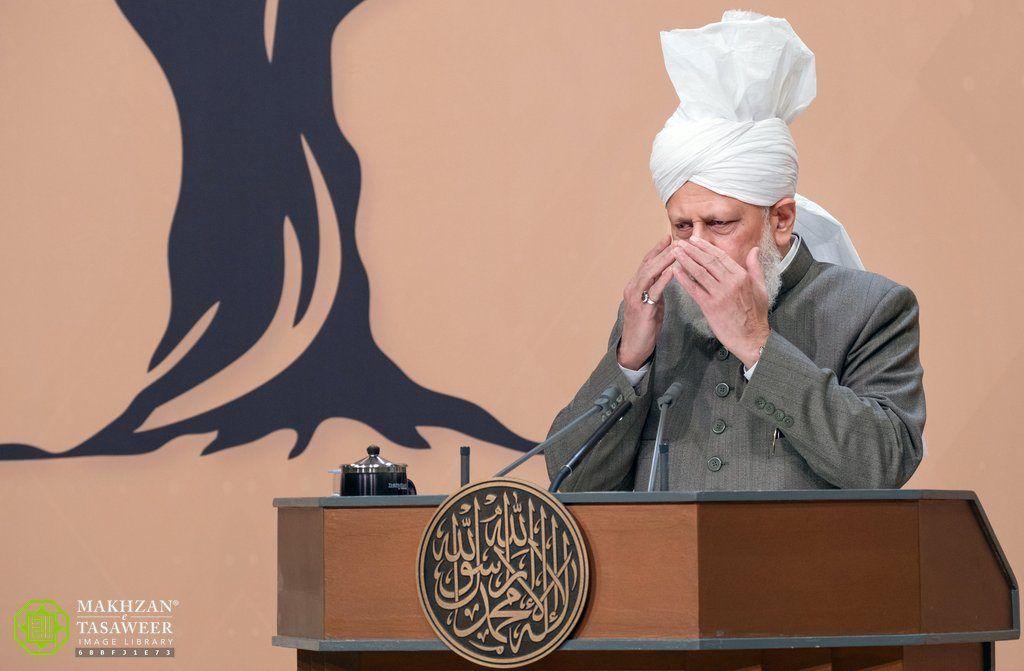
This text explores the profound relationship between gratitude and our connection with God, emphasizing teachings from the Holy Qur’an, Tafsir-e-Kabir, principles of psychology, and the insights of the Promised Messiah (as).
The Secret Within a Simple Word: Gratitude
Gratitude is a word that flows easily from the tongue but resonates deeply in the heavens. For the materialist, it may appear as just a social courtesy or a polite gesture. However, for the seeker of God, it represents much more. It is a key, a compass, and a spiritual elevator.
Hazrat Mirza Tahir Ahmad (rh), the fourth Khalifa of the Promised Messiah (as), once remarked, “Gratitude is not merely a moral virtue; it is a bridge between the soul and its Creator. It is a silent declaration of love that transcends words—it transforms the soul into light.”
But how does gratitude enhance our connection with the Creator? Let us delve deeper and explore the scientific, spiritual, and scriptural dimensions of this profound concept.
A 2003 study published in the *Journal of Personality and Social Psychology* found that people who kept gratitude journals experienced increased optimism and fewer physical ailments.
Perhaps most strikingly, grateful individuals feel more connected—not only to other people but also to something greater than themselves.
Isn’t this precisely what the Quran suggests? Could gratitude be how “Allah brings hearts to life”?
A Journey through Anthropology and Ancient Faiths
Anthropologists observe that in nearly all ancient civilizations, expressions of gratitude formed the foundation of rituals and worship—from offerings in early Mesopotamian temples to Vedic chants in ancient India. The human heart, regardless of geography or time, has always recognized that gratitude is the language of communion with the Divine. ll
This practice is not unique to Islam, but Islam perfects it.
While others offered gratitude to nature, Islam teaches us to offer our thanks to the Creator of nature.
Whereas others might have feared God in their offerings, Islam instructs us to love Him through our gratitude.
The Promised Messiah (as) and the Depths of Gratitude
Hazrat Mirza Ghulam Ahmad (as), the Promised Messiah, elevated the concept of gratitude to a remarkable level. He stated:
“Gratitude is not merely the remembrance of a favor—it is the acknowledgment that all goodness springs from one Source, and that Source is Allah.”
In his book *Barahin-e-Ahmadiyya*, he reflects on how, even during times of pain, a soul that trusts in Allah can find reasons to be grateful:
“What is hardship but the soil in which Divine nearness grows?”
His life exemplified gratitude in all circumstances—whether facing mockery, trials, or even attempts on his life. He responded not with bitterness, but with a heart filled with praise and thankfulness. Why? Because his gratitude was not based on circumstances; it was deeply rooted in theology.
Gratitude in the Midst of Suffering
One might ask: How can I feel grateful when my life is filled with grief? When does a child die? When does the storm cease?
Here, the insight of Hazrat Mirza Tahir Ahmad (rh) offers a profound spiritual perspective. He writes: “Gratitude is not the denial of grief. It is the affirmation that even grief carries God’s fingerprints. To be grateful in pain is to testify that my Lord is still with me.”
Indeed, when Prophet Ayub (Job) was stripped of everything, he did not weep for what he had lost; instead, he wept out of fear that perhaps God had become displeased with him. Such was his love-born gratitude.
The Sociology of Gratitude: Repairing a Fractured World
Gratitude is not just a personal feeling; it has the power to heal society. It can transform entitlement into humility, anger into forgiveness, and greed into a sense of sufficiency.
In an era dominated by consumerism and spiritual anxiety, embracing gratitude has the potential to reshape our communities. It fosters trust, empathy, and solidarity. Communities built on gratitude are stronger, more cohesive, and more in tune with the divine.
When a nation focuses on giving thanks for its blessings, rather than fighting over what it lacks, it invites greater abundance, as promised by Allah.
How to Practice Transformative Gratitude
If you wish to deepen your connection with Allah through gratitude, start with the following practices:
Daily Remembrance (Zikr): Reflect on one blessing each day and sincerely repeat “Alhamdulillah” from the heart, not just with your words.
Salat (Prayer): Transform your prayers into conversations filled with gratitude.
Gratitude Journal: Before going to sleep, write down three divine favours from the day. This practice helps renew your spiritual sensitivity.
Serve Others: True gratitude inspires nobleness. Giving in Allah’s way is a powerful expression of thanks.
In the End: Gratitude Is Worship
In his final Friday sermons, Hazrat Mirza Tahir Ahmad (rh) emphasized that gratitude, or Shukr, is at the root of true spirituality. He stated, “When you see everything as a favour from your Beloved, even the thorns feel like petals. Gratitude is worship. Gratitude is love. Gratitude is God-realization.”
So, the next time you say “Alhamdulillah,” take a moment to pause. Don’t say it mindlessly. Allow it to rise from the depths of your soul, like a whispered expression from creation itself. When you do this, know that you are not just thanking Allah—you are drawing closer to Him.
Final Reflection
Gratitude does not bring God down to us; instead, it elevates us to Him. In that ascent, we discover our true purpose—not merely to exist, but to love the One who gave us life.
 Radio VOIB