It was not the sword, but the essence of Islam that triumphed that day.
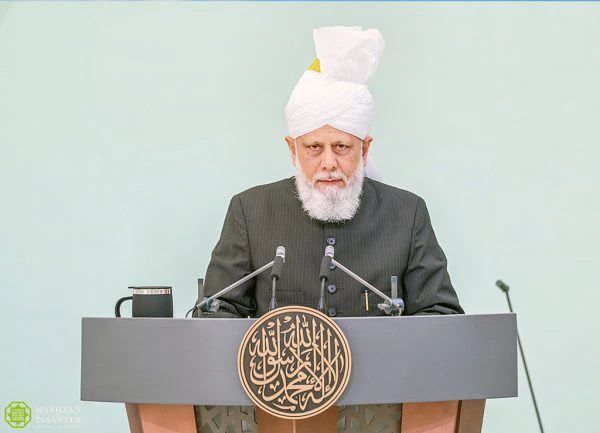
I bear witness that there is no god but Allah, alone—without partner—and that Muhammad is His servant and Messenger. Now then, I seek refuge in Allah from the accursed Satan.
In the name of Allah, the Most Gracious, the Most Merciful. Praise be to Allah, Lord of all worlds; the Most Gracious, the Most Merciful; Master of the Day of Judgment. You alone we worship, and You alone we ask for help. Guide us to the Straight Path, the Path of those upon whom You have bestowed Your favour, not of those who have earned Your anger, nor of those who go astray.”
Now, let me share further details about the event of the Conquest of Makkah. There is a detailed narration concerning the duration of the Holy Prophet’s (peace and blessings of Allah be upon him) stay in Makkah following his triumphant return. He resided there for several days, though the exact number is disputed. According to a narration in Sahih al-Bukhari, Ibn Abbas reported that the Prophet ﷺ remained for nineteen days. During that time, he performed two-rakat prayers, shortening his prayers (qasr). Other traditions suggest he stayed for eighteen, seventeen, or even fifteen days. The esteemed scholar Ibn Hajar Al-Asqalani preferred the nineteen-day account, as most reports mention this duration. He reconciled the differing narrations by explaining that those referring to nineteen days included both the days of entry into and departure from Makkah. Those who cited seventeen days typically did not count the travel days, while those mentioning eighteen counted one of them, and the tradition of fifteen disregarded both entry and exit days.
Some Orientalists also recognize the Prophet’s ﷺ magnanimity. Dr. William Muir, the renowned Scottish orientalist, noted in his work The Life of Muhammad, Founder of the Faith of Islam, that despite any past offences, the Prophet’s forgiving nature was a remarkable stance for his own benefit. Muir acknowledged that after the conquest of Makkah, people joined the Prophet with heartfelt loyalty, and within weeks, thousands stood by his side with unwavering fidelity.
Similarly, William Gomery, a Scot who had previously voiced strong opposition to Islam and the Prophet ﷺ, stated in Muhammad at Medina that those under his leadership felt justly treated, which fostered harmony, tranquillity, and deep enthusiasm within the Islamic community, unlike the unrest prevalent in other regions.
What stands out is the Prophet’s vision, insight, foresight, and strategic wisdom. When the Muslim community was small and focused solely on self-preservation against its enemies, he envisioned a united Arabia that would prosper, with the people of Makkah playing not only their traditional commercial roles but also a greater part. Almost everyone, even the most adversarial, now bowed before him. Despite challenges and scarcity, they advanced toward their goals with steadfast trust.
If the truth of these historical events were not evident, few mothers would accept that a humble, once-reviled man from Makkah could return as a conqueror. The American orientalist Arthur Gladden, in his work Sīrat-ul-Nabi, praised the Prophet’s universal forgiveness, noble character, and tolerance. He wrote that when the Prophet mounted the camel that had faithfully carried him on many occasions and entered the city, his heart overflowed with gratitude, sensing a peaceful reception from the silent streets.
He commended the Prophet’s ability to forgo vengeance, despite being aware of past injustices, and his directive to his army to avoid bloodshed while expressing humility and gratitude to Allah in everything he did. Gladden noted that although Khalid ibn al-Waleed once “met strength with strength,” the Prophet disliked this approach. His first command was to cleanse the Ka‘bah of idols. From its height, he then instructed the call to prayer. A herald was sent forth, ordering every man to destroy any idols he encountered near the Ka‘bah. Gladden recounts that only ten to twelve of the most brutal idolaters were sentenced; four were executed. In comparison to the brutality exhibited by the Crusaders in Jerusalem, who massacred seventy thousand Muslims in 1099, or the British atrocities on the Gold Coast in 1874, the conduct of the Prophet ﷺ was profoundly humane. Emphasizing that the conquest was religious and not political, the Prophet rejected any claims to royalty or personal aggrandizement, shunning monarchical dominion. When the chiefs of Makkah were brought before him, he asked, “What hope do you have of me?” They replied, “O generous brother, mercy.” He responded, “Then let it be so: you are all free.”
Another American orientalist, Ruth Cranson, noted in World Faith that in early 630 CE, the same man who had been expelled from the city a decade earlier now re-entered with ten thousand seasoned warriors. The Prophet’s approach and actions during this time showcased an extraordinary blend of strength, compassion, and vision.
 Radio VOIB