A Featured Editorial
By: Saiful Islam
Introduction: Trials that Reveal the Soul
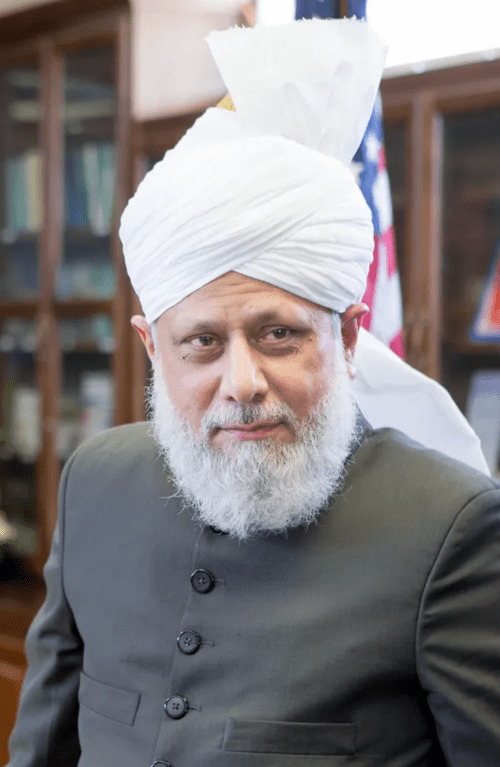
On 5th December 2025, Hazrat Mirza Masroor Ahmad (aba), Khalifatul Masih V, continued his majestic and spiritually stirring narration of events following the Expedition of Tabuk.
The sermon, rooted in the rich scholarship of Hazrat Mirza Bashiruddin Mahmud Ahmad (ra) and the awe-inspiring example of the Holy Prophet Muhammad (sa), was not merely a series of historical anecdotes.
It was, in reality, a call to awaken the spiritual conscience of every Ahmadi Muslim today.
For every age, Allah raises a guardian of faith.
For our age, that guardian is Khilafat-e-Ahmadiyya — and through these sermons, Huzoor (aba) invites us to relive history not as distant observers, but as moral participants.
The story of Hazrat Ka‘b bin Malik (ra), the social boycott in Madinah, the discipline of the companions, the expeditions of Hazrat Khalid bin Walid (ra), and finally the army of Usamah (ra) — all converge to reveal a singular truth:
Spiritual victory is granted only to those who remain steadfast, humble, obedient, and utterly devoted to the pleasure of Allah.
The Trial of Ka‘b bin Malik (ra): A Mirror for Every Community
Hazrat Ka‘b bin Malik (ra) was no ordinary companion.
He had stood shoulder to shoulder with the Holy Prophet (sa) in every major battle — except one: Tabuk.
It was a momentary lapse.
But in the spiritually disciplined society of early Islam, even a lapse was enough to trigger self-reflection at a communal scale.
Huzoor (aba), quoting Hazrat Musleh Maud (ra), explained that the Holy Prophet (sa) imposed a strict social boycott of the three companions who stayed behind from Tabuk without valid excuse.
No conversation, no social interaction — not out of hatred, but as spiritual rehabilitation.
Musleh Maud (ra) drew an instructive parallel for the Ahmadiyya Community during the disorder in Qadian:
When disciplinary measures are imposed, they must be honoured.
Those who seek to weaken the community are like venomous snakes; to embrace them is to embrace destruction.
In the age of online fitnah, whispers, and social media chaos, these words strike harder than ever.
A Letter from the King of Ghassan: The Temptations of Ego
While enduring the boycott, Hazrat Ka‘b (ra) received a letter from the Christian Arab ruler of Ghassan.
The king attempted to exploit Ka‘b’s emotional vulnerability:
“Come to us. We will honour you.”
It was a tempting offer — political, material, and emotional.
But true loyalty shines brightest in the darkest test.
Hazrat Ka‘b (ra) tore the letter to pieces.
Musleh Maud (ra) used this to remind us of another modern disease:
“Today, people demand that their past services be considered before they are disciplined.
But righteous service is that which is rendered only for Allah — not for praise, position, or leverage.”
This is a resounding message for every missionary, office bearer, volunteer, and member of the Jamaat:
Obedience is not slavery — it is spiritual freedom.
Service is not a favour to the Community — it is a favour from God to us.
Islam Ascends: The Waves of Victory After Tabuk
Huzoor (aba) described how the Expedition of Tabuk became a turning point.
Not a sword was raised in battle, yet Islam’s moral authority radiated across Arabia.
The tribes saw:
a leader who forgives,
a community that obeys,
and a divine mission untouched by worldly power.
It was during this wave of spiritual momentum that the Holy Prophet (sa) dispatched various expeditions — not to conquer, but to invite, reconcile, and morally uplift.
The Expedition to Najran: Hazrat Khalid bin Walid (ra)
Najran was a region of strength and tribal identity.
Yet the Holy Prophet’s (sa) approach remained unwaveringly peaceful.
He instructed Hazrat Khalid bin Walid (ra):
“Invite them to Islam three times before any other step.”
Hazrat Khalid (ra) followed this command with exact precision.
Within three days, the people accepted Islam willingly.
The group that visited Madinah was greeted with prophetic warmth.
Their humility impressed the Holy Prophet (sa) so deeply that he asked:
“Are you the people who would make their enemy flee?”
Four times he asked — teaching them (and us) that humility is the garment of true strength.
The Final Expedition: The Army of Usamah (ra)
The last army organized by the Holy Prophet (sa) was under the command of a young man — Hazrat Usamah bin Zaid (ra), barely 18 or 19 years old.
Some elders questioned the assignment.
The Holy Prophet (sa) was displeased.
Spiritual leadership is chosen by God, not by age, rank, or ego.
This lesson echoes profoundly today, when the world constantly challenges spiritual authority by worldly criteria.
Even as the Holy Prophet (sa) neared his final moments, he insisted:
“Dispatch Usamah’s army.”
After his passing, Hazrat Abu Bakr (ra) faced immense political turmoil — rebellions, external threats, internal insecurity.
Advisors suggested delaying the army.
But Hazrat Abu Bakr (ra) declared one of the most powerful statements in Islamic history:
“How can I withhold the very army that the Holy Prophet (sa) himself ordered to depart?”
It was a defining moment of absolute obedience.
Under divine help, Usamah’s (ra) army returned victorious — and the early Muslim state survived its gravest political crisis.
The Moral Architecture of an Islamic Community
Through these incidents, Huzoor (aba) guided the Community to reflect upon:
- Obedience to Divine Authority
Even the greatest companions accepted discipline.
The Caliph’s instructions — like the Prophet’s instructions — are for spiritual order, not personal preference.
- Serving for Allah Alone
Past sacrifices do not grant immunity from accountability.
True service is invisible, humble, and God-centred.
- Avoiding Spiritual Snakes
Those who spread disorder, slander, or doubt must never be empowered.
Their companionship drains the soul.
- Trusting Divine Decisions
God can raise a young man over elders — or a quiet, humble servant over acclaimed warriors.
Spiritual leadership is God’s domain.
- Perseverance in Trials
Ka‘b bin Malik (ra) endured isolation but emerged purified.
Usamah (ra) was challenged but emerged as a symbol of divine wisdom.
The Humanity Behind the Sermon: Funeral Prayers and Spiritual Legacy
The sermon concluded with the funerals of devoted servants of Islam Ahmadiyyat:
Azizur Rahman Khalid (USA) and Edi Hamaidi (Indonesia).
Both men lived lives reflecting the very values discussed earlier:
sacrifice,
humility,
devotion to Khilafat,
love for the Holy Qur’an,
and endurance.
One served across Africa with simplicity and sincerity.
The other passed away during Umrah and was buried in Jannat al-Baqi‘ — a divine honour that even earthly opponents cannot obstruct.
Their stories stood as real-life companions of our age — reminding us that spiritual heroism is not limited to history.
Conclusion: A Call for Steadfastness in a Fractured World
The life of the Holy Prophet (sa) is not a sequence of ancient events — it is a living prescription for the crises of the modern world:
division,
ego,
rebellion,
misinformation,
and spiritual decay.
Through this sermon, Huzoor (aba) reminds the world that:
Victory comes not from weapons, but from truth.
Transformation comes not from power, but from purity.
And protection comes not from numbers, but from God alone.
We stand today at the edge of trials no less severe than those of Tabuk.
But the path is illuminated:
Remain obedient.
Remain humble.
Remain united.
Remain devoted.
Remain under Khilafat.
For those who walk this path, Allah’s promise is eternal:
“Those who are safeguarded by God, no harm can ever reach them.”
May Allah enable us to internalize these lessons and rise as true servants of the Holy Prophet Muhammad (sa) in this age.
Ameen.
If you would like, I can also:
 Radio VOIB