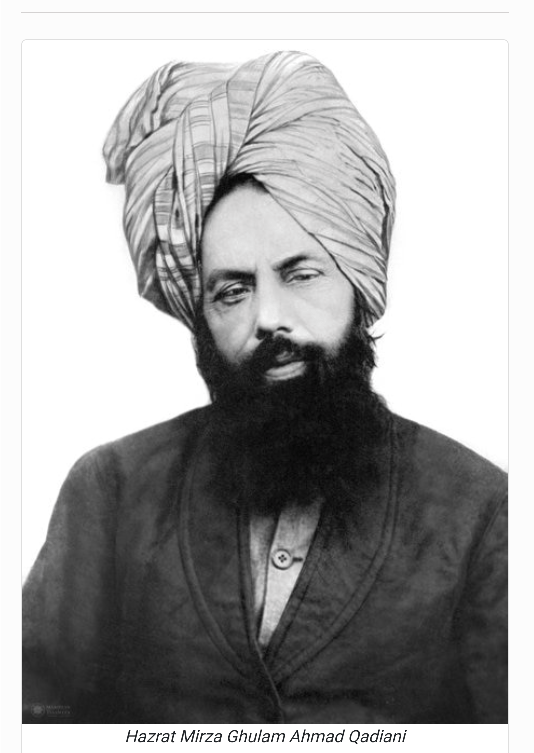
Hazrat Mirza Ghulam Ahmad’s Restoration of Tawheed in the Modern Age The spiritual and intellectual landscape of nineteenth-century colonial India was defined by a profound crisis of faith within the Islamic community. Following the formal dissolution of Muslim political sovereignty after the 1857 uprising, the Indian subcontinent became a crucible for competing religious ideologies, where Christian missionaries and Hindu revivalist movements launched sophisticated, multifaceted attacks on the core tenets of Islam. It was against this backdrop of ideological siege that Hazrat Mirza Ghulam Ahmad emerged from the secluded village of Qadian, embarking on a mission to reinstate the absolute Unity of Allah—Tawheed—not as a stagnant philosophical concept, but as a living, mobilizing force capable of transforming the human psyche and revitalizing a demoralized Ummah. His methodology was uniquely “best featured” in its synthesis of rationalistic defense, emotive literary power, and experiential verification of the Divine, a combination that sought to bridge the chasm between ancient scripture and the demands of modern reason. The Epistemological Groundwork: Barahin-e-Ahmadiyya as a Rational Bastion The publication of Barahin-e-Ahmadiyya in 1880 marked a decisive turn in the history of Islamic apologetics. Before this work, much of the defense of Islam had relied on traditional rhetoric that often failed to address the burgeoning influence of Western rationalism and the aggressive polemics of the Arya Samaj. Ahmad’s first major work was intended as a fifty-volume series, though he later declared it a completed spiritual project after the fourth volume, shifting toward a direct messianic claim. The core objective of the Barahin was to provide three hundred rational proofs for the truth of the Holy Quran and the prophethood of Muhammad, grounding the Unity of Allah in the very fabric of nature and human intelligence. Ahmad argued that Tawheed was the “backbone” of Islam, an uncompromising monotheism that rejected any notion of God having a son or being begotten, as seen in his critiques of the Christian Trinity. However, his approach was not merely defensive; it was proactively demonstrative. He asserted that the Quran was the only scripture that provided internal and external proofs of its divine origin, challenging representatives of all other faiths to produce a similar defense of their own books. This “best featured” methodology of issuing public challenges with monetary rewards—such as the 500-rupee prize for any non-Muslim who could match his defense of truth—mobilized the Muslim community by giving them a newfound sense of intellectual superiority. Comparative Religious Polemics in Late 19th-Century India Religious Entity Core Polemical Strategy Stance on Monotheism Ahmadiyya Rebuttal Mechanism Christian Missionaries Trinity and Atonement; Christ as the Living God. Trinitarian; emphasizes God’s presence through Jesus. Proof of Jesus’ natural death in Kashmir; rejection of the Cross. Arya Samaj Vedic infallibility; Souls as eternal and uncreated. Monism/Polytheism; souls are co-existent with God. Proof of the creation of souls; the absolute sovereignty of the Creator. Traditional Islam Preservation of Fiqh; static belief in past miracles. Traditional Tawheed; God is often seen as silent/distant. Concept of the “Living God” who speaks today; experiential Tawheed. Naturalists/Atheists Denial of revelation; reliance on pure reason. Rejection of a deity; Materialism. Arguments from the “Book of Nature”; limits of reason without revelation.
The Psychology of the Soul: Establishing Tawheed through Human Reformation In his seminal essay, The Philosophy of the Teachings of Islam, presented at the 1896 Conference of Great Religions in Lahore, Ahmad moved beyond external polemics to provide an internal, psychological map of monotheism. He addressed five fundamental questions set by the conference moderators, but his unique contribution was the linking of man’s physical state to his spiritual destination. He argued that the Unity of Allah cannot be fully grasped by a mind that is enslaved to its base desires. Instead, he identified three sources of the human state that act as springs for moral and spiritual development. The first stage, Nafs-e-Ammara (the self that incites to evil), represents man’s natural, animalistic state where he follows his natural bent in eating, drinking, and sleeping without the guidance of reason. Ahmad argued that this state is the primary barrier to Tawheed because it centers the individual’s ego rather than God’s sovereignty. The transition to the second stage, Nafs-e-Lawwama (the reproving self), marks the dawning of conscience, where the individual begins to struggle against sin and experiences a “moral state”. It is only in the third stage, Nafs-e-Mutma’inna (the soul at peace), that the Unity of Allah is established within the heart. At this level, the distance between the Creator and the believer vanishes as “all your wishes, hopes and desires merge into His will”. This psychological turn was “inspiring and engaging” because it transformed monotheism from a dry article of faith into a lived process of self-actualization. The “Living God” Concept: A Mobilizing Turnout A central “feature” of Ahmad’s writings was the emphasis on a “Living God” (Khuda-e-Hayy). He criticized contemporary religious scholars for presenting God as a historical figure—a “stone-like” entity who performed miracles in the past but remained silent in the present. Ahmad asserted that “the God of Islam is such a Living God” who can make an individual a direct recipient of revelation today, just as He did for the prophets of old. This was not merely a theological claim but was backed by what he described as “signs among the signs of God”. For example, he recounted a vision in which a “shining light” emerged from his heart and spread in all directions, which he interpreted as the heavenly light of the Quranic verities descending upon him to expose the untruth of false religions. He used personal anecdotes to illustrate God’s active participation in the world, such as the revelation regarding his father’s death, which provided him with “wonderful tranquillity” and a “steel nail” of conviction that God would provide for his future. Such narratives were designed to mobilize his followers by transforming their belief from Ilm-ul-Yaqeen (knowledge by inference) to Haq-ul-Yaqeen (knowledge by experience). Categorization of Divine Signs for establishing Tawheed Type of Sign Definition and Purpose Specific Example in Ahmad’s Writing Personal Revelation Direct communication to settle the heart. Revelation of his father’s death; “Is not Allah sufficient for His servant?”. Prophetic Fulfilment Signs in the physical world confirming his status. The lunar and solar eclipses during Ramadan of 1894. Majestic Manifestations Wrathful signs against those who humiliate God’s messenger. The plague in Sialkot following the mockery by Hafiz Sultan. Spiritual Illuminations Symbolic visions of light and beauty. Pillars of light (white, green, red) representing the union of God and man. Acceptance of Prayer Tangible responses to supplication in time of need. Provision of Eid clothes for Maulana Noor-ud-Din “in the nick of time”.
Sultan-ul-Qalam: The Power of the Pen in Mobilizing the Ummah Ahmad’s self-designation as Sultan-ul-Qalam (King of the Pen) reflected his belief that the struggle for Islam in the modern age was an intellectual and literary one. He authored over ninety books, often writing in Urdu, Arabic, and Persian simultaneously to reach diverse audiences. His style was characterized by a “meandering, loquacious” prose that was rich in religious terminology and often bearing a “polemic and vindicatory tone”. He utilized the medium of the printed journal and the newspaper to “broadcast in all countries of Europe and Asia” the true teachings of Islam, effectively founding what scholars have called “the very first global Muslim missionary network”. The mobilizing power of his pen was evident in the way he addressed his community. In Noah’s Ark, he provided a “deep and thorough revolution” of behavior, instructing his followers to “hate everything impure and sinful” and to “be humble in spirit, kind and gently, and forgiving”. He argued that a community devoted to the Unity of Allah must be a “group of men devoted to God” who establish “righteousness, purity, piety, peace and goodwill among men”. This ethical mobilization was tied directly to his theological claims; he argued that as long as his followers sang the praises of Allah and declared His Unity, no power on earth could destroy them. Refuting the Trinity and the “Breaking of the Cross” Perhaps the most “engaging” and controversial feature of Ahmad’s establishment of Tawheed was his revolutionary stance on the life and death of Jesus. For centuries, both traditional Muslims and Christians believed that Jesus had ascended bodily into heaven. Ahmad argued that this belief was the “central beam” of the Christian missionary effort, allowing them to claim that Jesus was “alive” while Muhammad was “dead”. In works like Jesus in India, he compiled evidence from medical texts, historical accounts, and the Quran to argue that Jesus survived the crucifixion, was healed with the “Ointment of Jesus” (Marham-i-Isa), traveled to Kashmir to seek the lost tribes of Israel, and died a natural death at the age of 120 in Srinagar. Ahmad interpreted the prophecy of “breaking the cross” not as a physical destruction of icons, but as an intellectual demolition of the doctrine of Atonement. He argued that by proving Jesus’ mortality, the entire theological edifice of the Trinity and redemption through Christ’s blood was “broken”. This narrative provided a powerful tool for Muslim mobilization in the face of Christian missionary expansion. It allowed Muslims to “hold their head high once more,” as they no longer felt threatened by the perceived “superiority” of a living Christ over a deceased Prophet. The Theological Synthesis: Zilli and Buruzi Frameworks To reconcile his own claims to prophethood with the fundamental Islamic doctrine of Khatam-an-Nabiyyin (the Seal of the Prophets), Ahmad developed a nuanced theological framework based on Sufi concepts of Zill (shadow) and Buruz (manifestation). He emphasized that he was not an independent, law-bearing prophet, but a “subordinate prophet” who received his name and his prophethood only through “perfect obedience to the Holy Prophet”. This synthesis was essential for maintaining the Unity of Allah. By describing himself as a “manifestation” (Buruz), he argued that his advent was essentially the “reappearance” of the spirit of Muhammad and Jesus, intended to revive the original purity of Tawheed. He used the metaphor of a mirror to explain this relationship: just as a mirror reflects the sun without being the sun itself, a Zilli prophet reflects the qualities of the master prophet without possessing an independent authority. While this interpretation was rejected by the traditional ulema, it provided his followers with a way to navigate the theological complexities of modern messianism without abandoning the core pillars of the faith. Tawheed as a Source of Social and Political Reform Ahmad’s establishment of Tawheed had profound sociological implications. He argued that the recognition of One God necessitated the “service of humanity,” for all humans are creatures of the same Divine Being. In his writings, he redefined the concept of “success” in spiritual and ethical terms rather than financial or political ones, emphasizing that “true success stems from spiritual fulfillment and obedience to Divine will”. He was a vocal advocate for the rights of the marginalized, instructing his wealthy followers to set aside a portion of their substance for the “relief of poverty and distress”. He spoke to rulers, reminding them that their authority was a “trust” from God and that they should govern in consultation with the people. Most significantly, he reinterpreted the concept of Jihad, arguing that the “Jihad of this age” was the propagation of Islam’s excellence through “pen and knowledge, not the sword”. This peaceful mobilization was a strategic necessity in the context of British colonial rule, but it was also a theological commitment to the idea that the truth of Tawheed must be accepted through “reasoning, good moral example, and the natural beauty of its principles” rather than force. Impact on 19th Century Muslim Demographics and Thought Period / Event Sociological or Religious Impact Statistical or Historical Evidence Post-1880 (Barahin) Halting the tide of Christian conversions in Punjab. ACclaim from even future opponents; reinvigoration of Muslim sermons. 1891-1901 Decade Significant increase in the Muslim population in India. 1901 Census showed Muslims added 5 million souls, far exceeding other religions. Establishment of Bai’at Formation of a distinct, disciplined religious community. 40 followers in 1889 grew to 400,000 by 1908. Global Expansion Spread of Islamic literature to the West. Translation of the Quran into English (1918) and other European languages. Intellectual Renaissance Engagement with modern science and global dialogue. Influenced American religious culture and 20th-century missionary networks.
The Metaphors of Monotheism: Emotive Language and Rhetorical Features Ahmad’s writings are “best featured” for their use of evocative metaphors that made the abstract concept of Tawheed tangible to the common man. He often used the metaphor of “wine” to describe the intoxicating effect of divine love: “Only when you drink deeply from this wine will you be able to go out into the world and intoxicate people with the belief and understanding of the Unity of God”. He likened God to a “Master and King” who has “no equal or partner,” and he described the world as a “trap” where the only safety is found in the “secluded place of God”. His linguistic prowess was a key part of his mobilization. He claimed that God had taught him 40,000 consonantal roots of the Arabic language, allowing him to produce Arabic works that he challenged his opponents to parallel. He used harsh, “deterrent” language against those who slandered Islam, sometimes using repetitive curses as a form of rhetorical warfare intended to silence the “enemies of Islam”. Yet, he also utilized “fine visions” and “captivating” descriptions of spiritual illuminations to draw the hearts of seekers toward the “beauty of the Holy Quran”. This dual-natured rhetoric—at once a fierce shield and a gentle invitation—engaged the emotional and intellectual faculties of his audience simultaneously. Conclusion: The Legacy of Experimental Monotheism Hazrat Mirza Ghulam Ahmad’s establishment of the Unity of Allah was a holistic endeavor that synthesized theology, psychology, and sociopolitical reform. By presenting a “Living God” who speaks and acts in the present age, he provided an inspiring and mobilizing alternative to the stagnant beliefs of his time. His writings sought to prove that monotheism was not merely a doctrine to be defended, but a reality to be experienced. The “best featured” manner of his work—from the rational rigor of the Barahin to the psychological depth of the Philosophy of the Teachings of Islam—offered a “grand news for those searching the truth”. His legacy as the Sultan-ul-Qalam remains visible in the global Ahmadiyya Muslim Community, which continues to prioritize the peaceful propagation of Islam and the moral reformation of society. By linking the absolute Oneness of God to the “service of humanity,” he established a framework for a modern Islamic identity that is both deeply traditional and radically contemporary, ensuring that the “Unity of Allah will never be effaced from the world”. Through his ninety-one books and tens of thousands of letters, he built an “Ark” of faith that sought to preserve the pristine purity of Islam amidst the turbulent storms of the modern age. Works cited
The Formation Process of Ahmadiyya Movement – DergiPark, https://dergipark.org.tr/en/download/article-file/3502370 2. The Ahmadiyah Movement A History And Perspective, https://ia902906.us.archive.org/5/items/in.ernet.dli.2015.119144/2015.119144.The-Ahmadiyah-Movement-A-History-And-Perspective_text.pdf 3. Ghulam Ahmad, Mirza | Oxford Research Encyclopedia of Religion, https://oxfordre.com/religion/display/10.1093/acrefore/9780199340378.001.0001/acrefore-9780199340378-e-1250?p=emailAyyqyM3NqGs1U&d=/10.1093/acrefore/9780199340378.001.0001/acrefore-9780199340378-e-1250 4. Barahin-e-Ahmadiyya – alislam.cloud, https://files.alislam.cloud/pdf/Barahin-e-Ahmadiyya-Part-4.pdf 5. The Philosophy of the Teachings of Islam – alislam.cloud, https://files.alislam.cloud/pdf/Philosophy-of-Teachings-of-Islam.pdf 6. Mirza Ghulam Ahmad – Wikipedia, https://en.wikipedia.org/wiki/Mirza_Ghulam_Ahmad 7. Barahin-e-Ahmadiyya – Wikipedia, https://en.wikipedia.org/wiki/Barahin-e-Ahmadiyya 8. The Philosophy of the Teachings of Islam — Part I | The Review of Religions, https://www.reviewofreligions.org/2771/the-philosophy-of-the-teachings-of-islam-part-i/ 9. The Light – Ahmadiyya.org, https://ahmadiyya.org/light/light976.pdf 10. Barahin-e-Ahmadiyya: Its place in Epistemology, Sociolinguistics and Psychology, https://www.alhakam.org/barahin-e-ahmadiyya-its-place-in-epistemology-sociolinguistics-and-psychology 11. Barahin-e-Ahmadiyya NEW | The Review of Religions, https://www.reviewofreligions.org/audiobooks/barahin-e-ahmadiyya-new/ 12. Barahin-e-Ahmadiyya Part III – alislam.cloud, https://files.alislam.cloud/pdf/Barahin-e-Ahmadiyya-Part3.pdf 13. The Concept of God (Allah) and the Unity of God (Tawhid) in Islamic Worldview, https://ideas.repec.org/a/bcp/journl/v9y2025i11p5120-5128.html 14. 150 years ago: The King of the Pen publishes his first article in defence of Islam | Al Hakam, https://www.alhakam.org/promised-messiah-first-article-in-defence-of-islam/ 15. Barahin-e-Ahmadiyya: a Timeless Classic, https://ahmadiyyaliterary.org/barahine-ahmadiyya-a-timeless-classic/ 16. The Philosophy of the Teachings of Islam – Wikipedia, https://en.wikipedia.org/wiki/The_Philosophy_of_the_Teachings_of_Islam 17. The Philosophy of the Teachings of Islam – Hazrat Mirza Ghulam Ahmad – Google Books, https://books.google.com/books/about/The_Philosophy_of_the_Teachings_of_Islam.html?id=XQvDsVDtHuYC 18. Life after Death – Al Islam, https://www.alislam.org/question-answer/life-after-death/ 19. The concept of the soul is vital to faith in a Living God. If God does not create the soul, then the divinity of God comes under – The Muslim Sunrise, https://muslimsunrise.com/wp-content/uploads/2019/07/2006_winter.pdf 20. Teachings of Hazrat Mirza Ghulam Ahmad (The Founder of the Ahmadiyya Movement), https://alahmadiyya.org/books-islam-ahmadiyya/english-books/the-ark-of-noah-by-hazrat-mirza-ghulam-ahmad-of-qadian/teachings-of-hazrat-mirza-ghulam-ahmad-the-founder-of-the-ahmadiyya-movement/ 21. From The Archives: Why I Believe in Islam | The Review of Religions, https://www.reviewofreligions.org/13640/from-the-archives-why-i-believe-in-islam-2/ 22. Our God, a Living God – Al Islam, https://www.alislam.org/articles/our-god-living-god/ 23. How did Hazrat Mirza Ghulam Ahmad a.s. revive Islam? – Part III (Belief in divine books), https://www.alhakam.org/how-did-hazrat-mirza-ghulam-ahmad-revive-islam-part-iii-belief-in-divine-book 24. Essence of Islam Part 28: The Law of Nature Demands Revelation | The Review of Religions, https://www.reviewofreligions.org/1601/essence-of-islam-part-28-the-law-of-nature-demands-revelation/ 25. Testimony of the Holy Quran – alislam.cloud, https://files.alislam.cloud/pdf/Testimony-of-the-Ho
 Radio VOIB