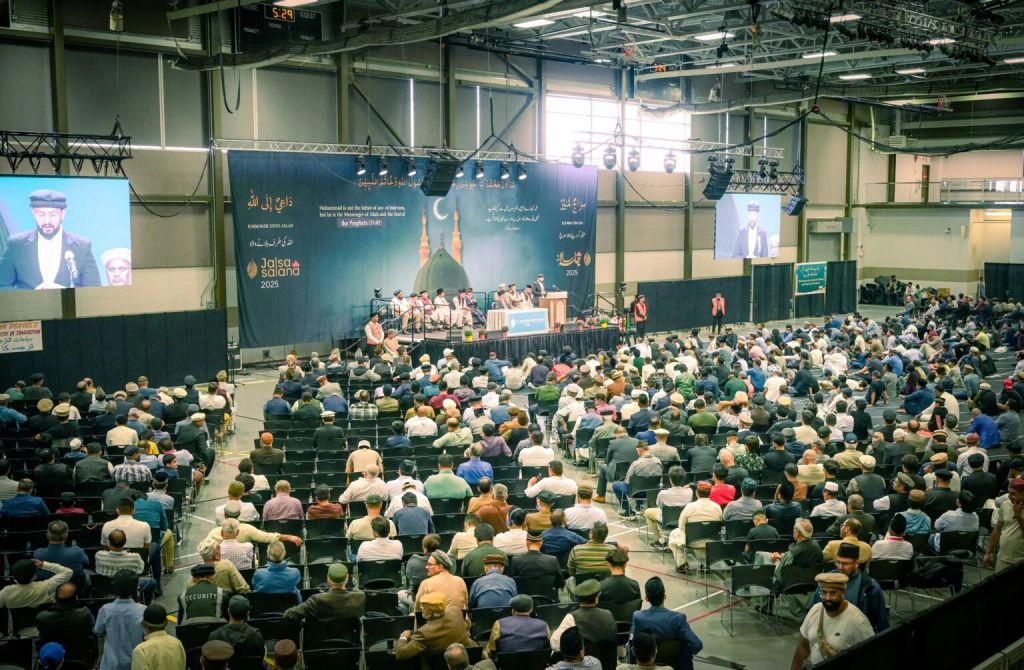
Inside One of North America’s Most Remarkable Grassroots Spiritual Gatherings
Across the vast landscapes of Western Canada—where mountains, prairies, and multicultural communities converge—an extraordinary annual gathering takes place. It is not merely a conference or cultural festival; rather, it is a living expression of faith, volunteerism, and human unity. Known as Jalsa Salana Western Canada, this gathering represents more than four decades of spiritual development, community resilience, and social engagement.
The origins of Jalsa Salana date back to 1891 in Qadian, India, when Hazrat Mirza Ghulam Ahmad established the institution as a gathering dedicated to spiritual renewal, intellectual growth, and brotherhood. What began as a modest assembly of 75 devoted followers has since evolved into a global network of annual conventions held in more than a hundred countries.
The Western Canadian chapter emerged in 1985 during a period of significant transition for the Ahmadiyya Muslim Community. Following restrictions placed on the community’s central gathering in Pakistan in 1984, regional conventions around the world gained increased importance. For the growing Ahmadi population across British Columbia, Alberta, Saskatchewan, and Manitoba, a local spiritual center became essential.
A defining milestone in this journey occurred in 1986, when Hazrat Mirza Tahir Ahmad, the Fourth Caliph of the Ahmadiyya Muslim Community, visited Western Canada. His visits to Edmonton, Calgary, and Vancouver inspired local communities and reinforced the vision for enduring religious and community institutions.
Over time, this vision was realized through the establishment of key mosques and community centers. The inauguration of Baitul Hadi Mosque in Edmonton in 1997 provided Northern Alberta with a permanent hub for worship, education, and community engagement. Subsequently, during the 2005 tour of Hazrat Mirza Masroor Ahmad, the Fifth Caliph, the foundation stones of Baitur Rahman Mosque in Vancouver and Baitun Nur Mosque in Calgary were laid. These institutions have since become significant spiritual landmarks, serving thousands and supporting the region’s expanding activities.
Today, Jalsa Salana Western Canada stands as a distinguished example of large-scale, volunteer-driven organization. Unlike many major events managed by professional agencies, every aspect—from transportation and security to food services, medical support, broadcasting, and hospitality—is delivered by dedicated volunteers.
At recent gatherings, more than 1,000 volunteers have served across specialized departments. The Langar Khana—the community kitchen inspired by the practice of the Promised Messiah—provides thousands of complimentary meals to attendees and guests. Medical teams offer on-site care, exhibitions present Islamic teachings to visitors, and media teams broadcast the event to audiences worldwide.
Beyond its spiritual objectives, the gathering serves as a bridge between communities. Civic leaders, interfaith representatives, Indigenous elders, and guests from diverse backgrounds participate in dialogue and cultural exchange. Guided by the principle “Love for All, Hatred for None,” the event emphasizes peace, mutual respect, and service to humanity.
Modern technology has further extended its reach. Through digital broadcasting, multilingual translation, and online platforms, thousands of individuals around the world are able to participate beyond the physical venue of the convention.
From its beginnings as a small gathering of immigrants seeking spiritual connection, Jalsa Salana Western Canada has grown into a major North American event welcoming thousands. It reflects a broader narrative: how faith communities preserve identity while fostering meaningful connections with the wider world.
It is a story of devotion translated into action—where prayer meets service, tradition meets innovation, and strangers are welcomed as honored guests.

